

How Perception Shapes Your Reality
Most people assume that their daily struggles are caused entirely by external circumstances. They blame a difficult colleague, a tense relationship, or a career that feels permanently stalled. As a result, they spend enormous energy trying to adjust the conditions of their life without ever examining the underlying operating system running quietly beneath them. That operating system is your unconscious mind. It has been running continuously since early childhood, filtering reality through a complex lens you never consciously chose. It selects which information to let through, which sensory patterns to reinforce, and which internal narratives to confirm, performing these calculations thousands of times every day.
The Filter Between You and the World
Every single second, your sensory organs receive roughly eleven million bits of information from the environment. However, your conscious mind can process only approximately forty of those bits per second. The remaining millions of inputs are processed unconsciously, filtered and discarded by a nervous system that prioritises efficiency above all else. Your brain cannot afford to treat every stimulus as novel. Instead, it builds internal maps of the world and matches incoming sensory data to those existing maps.
The difficulty arises when those internal maps are inaccurate, outdated, or constructed from early childhood experiences that no longer apply to your adult reality. Your unconscious mind acts as a gatekeeper. Information that aligns with your established beliefs gains access effortlessly. Information that contradicts your expectations is minimised, distorted, or ignored entirely. This is why two people can stand in the exact same room, witness the exact same event, and walk away with entirely different interpretations. Neither person is lying; each is simply reporting accurately from within their own perceptual filter.
Your perceptual lens is built from your personal history. Every significant emotional experience, every repeated message from a parent or teacher, and every moment of early rejection or safety has contributed to a set of core beliefs that functions as the architecture of your perception. In my work as an anxiety hypnotherapist, I help clients realize that when you change that architecture at the unconscious level, you automatically alter what you perceive in the world.
Why Focusing on What You Do Not Want Keeps You Stuck
There is a core principle in both Neuro-Linguistic Programming (NLP) and behavioral neuroscience: the human brain does not process negation in the way conscious logic assumes. When you repeat to yourself, ‘I do not want to feel anxious,’ the primary mental representation activated in your nervous system is still anxiety. The implicit instruction you have given your body is to focus on that exact unpleasant state.
This biological reality explains why the chronic worrier worries more, why the person obsessed with avoiding failure accidentally creates the conditions for failure, and why someone determined not to repeat their parents’ relationship patterns often recreates those exact dynamics. Attention, whether framed positively or negatively, acts as active programming. Whatever state you feed with your focus will inevitably amplify within your nervous system.
Neurobiological research confirms this mechanism. Sustained focus on threat-related stimuli strengthens the neural pathways associated with hypervigilance and autonomic fear responses, making those pathways more dominant and easily triggered over time. The brain gets better at whatever it practices, including practicing anticipatory dread. The shift required for genuine healing involves defining what you are moving toward rather than what you are moving away from. Instead of stating ‘I do not want to freeze during my meeting,’ state ‘I want to feel calm, anchored, and clear when speaking.’ This distinction sounds subtle, but its physiological impact on your threat-detection system is profound.
The Unconscious Framework for Success
A truly constructive mental posture is not a temporary mood; it is a neurological habit. It is the practice of directing your reticular activating system (RAS), the neural filter in your brainstem, toward possibility rather than danger. People who operate with an open, resourceful posture do not encounter more opportunities because life treats them better. They notice more opportunities because their internal filter is calibrated to spot them. Building this posture requires identifying and interrupting outdated unconscious conditioning and replacing those patterns with deliberate, emotionally anchored alternatives.
Cognitive Biases and the Illusions of the Mind
What a Cognitive Bias Actually Is
A cognitive bias is not a personal failure or a flaw in intelligence. It is a predictable, systematic shortcut taken by the brain to conserve energy. These mental shortcuts, known scientifically as heuristics, evolved because rapid pattern recognition was historically more survival-critical than slow deliberation. The difficulty in modern life is that your brain applies these ancient shortcuts to complex social and emotional situations where they do not fit, producing conclusions that feel intuitively true but are objectively inaccurate.
The Biases Most Likely to Damage Mental Health
Several specific cognitive biases directly maintain chronic anxiety and emotional distress:
- Confirmation Bias: The tendency to seek out, favor, and remember information that confirms your existing fear, while ignoring evidence that contradicts it. If your unconscious mind holds the belief that social situations are dangerous, confirmation bias will cause you to notice every ambiguous glance while overlooking warm smiles, keeping your amygdala locked in low-grade alarm.
- Catastrophizing: The habit of jumping automatically to the worst possible outcome. A minor mistake at work is interpreted as imminent job loss, or a momentary physical flutter is interpreted as a medical emergency. Neurologically, your brain cannot distinguish cleanly between an imagined catastrophe and a real physical threat, releasing cortisol in both instances.
- Negativity Bias: An evolutionary survival mechanism where negative events carry roughly three times the emotional weight of equivalent positive events. While useful for avoiding physical predators in ancient environments, in modern social settings it generates chronic pessimism, low self-worth, and persistent anticipatory dread.
- Attribution Bias: Attributing negative occurrences to stable internal flaws (‘I am defective’) while attributing positive successes to pure luck or circumstance, systematically eroding self-efficacy over time.
Critical Thinking as a Clinical Mental Health Intervention
Conventional mental health advice often focuses solely on managing symptoms after panic has already taken hold. While symptom management has value, it misses a foundational layer: examining the thinking architecture that generates the distress in the first place. Applying critical thinking to your own internal monologue is one of the most underutilised tools in psychological recovery.
When an automatic anxious thought arises, such as ‘Everyone in this meeting saw me blush and judged me,’ critical thinking invites metacognition (the ability to think about your thinking). You step back and ask: What is the objective evidence for this thought? What is the evidence against it? Is there a simpler, lower-stress interpretation? Neurobiological research demonstrates that deliberate cognitive reappraisal physically down-regulates amygdala activation and strengthens executive prefrontal control, gradually establishing calmer neural pathways.
Logic as a Defense and Occam’s Razor for Anxiety
The Principle and Why It Matters
Occam’s Razor is a classical philosophical principle attributed to the 14th-century logician William of Ockham. In modern terms, it states that when presented with competing explanations for an event, the explanation requiring the fewest assumptions is almost always the correct one. It is essentially a principle of parsimony: do not multiply complexity beyond what is strictly necessary to account for the observable facts.
Using Occam’s Razor to Interrupt Anxious Spirals
Anxiety is, at its core, an overactive pattern-matching problem. When your physical threat response fires, your conscious mind is recruited to explain why you feel alarm. Under stress, your mind does not look for the most accurate explanation; it constructs the most elaborate threat story to account for every worst-case scenario. This is how a short, one-word email from a manager gets transformed into a complex narrative about impending dismissal, financial ruin, and personal disgrace.
Applying Occam’s Razor cuts through this catastrophic fiction. You ask: What is the simplest explanation that fits the bare physical facts? The manager was busy. Or writing on a mobile phone. Or distracted. The simplest explanation requires zero extra assumptions about your competence or security. By adopting this parsimonious lens, you dismantle the catastrophe narrative before your autonomic nervous system gets flooded with emergency adrenaline.
Occam’s Razor as a Defense Against Manipulation
The exact same logical principle that halts internal anxiety spirals acts as a powerful shield against external manipulation and gaslighting. Interpersonal manipulation relies almost entirely on introducing artificial complexity, forcing you into intricate webs of explanation where the manipulator’s conclusion seems like the only exit. When someone presents a convoluted story to justify boundary violations, strip away the narrative layers and look purely at observable facts. Complexity in persuasion is frequently a sign that the argument cannot survive simplicity.
Concrete NLP Tools to Reframe and Reprogram Your Inner World
The Architecture of Mental Mastery
Neuro-Linguistic Programming, developed by Richard Bandler and John Grinder in the 1970s, rests on a foundational premise: the structure of subjective human experience can be identified, mapped, and systematically updated. The internal language you use, the mental images you construct, and the physical feelings you anchor to specific triggers are all learned conditioning. And any conditioning that was learned can be unlearned and updated.
Context Reframing and Converting Perceived Deficits Into Strengths
A reframe is a shift in the meaning or context attributed to an event, without changing the objective facts of the event itself. Context reframing asks: In what specific environment or situation would this exact trait or behavior be a profound asset? For instance, someone who was criticized in childhood for being ‘too sensitive’ carries a label that reads as a weakness. A context reframe recognizes that high sensitivity is an extraordinary asset in therapeutic work, artistic creation, and empathetic leadership. The core trait has not changed, but its context and emotional meaning have shifted completely.
Content Reframing and Turning Failure Into Useful Feedback Data
Content reframing asks: What else could this experience mean? If an important project or presentation falls short of your expectations, a threat-oriented mind interprets the outcome as proof of fundamental inadequacy. A content reframe does not deny the result; instead, it views the outcome as valuable, neutral feedback. Failure is simply data revealing where your current skills ended and where targeted growth begins. By shifting your emotional frame from identity judgment to skill acquisition, you maintain agency and curiosity.
Directed Neuroplasticity and Goal Orientation
Popular concepts like the ‘Law of Attraction’ are often dismissed when wrapped in mystical claims about thoughts having magnetic properties. However, when stripped of pseudoscientific jargon, the core mechanism aligns perfectly with neuroscience. When you hold a clearly defined, sensory-rich representation of a desired goal in your mind, your reticular activating system calibrates to notice relevant resources in your environment. Your unconscious behavioral choices align with that vision, and your brain begins building the neural circuitry required to achieve it. This is directed neuroplasticity in action.
Hypnotic Language Patterns for Conflict Resolution and Rapport
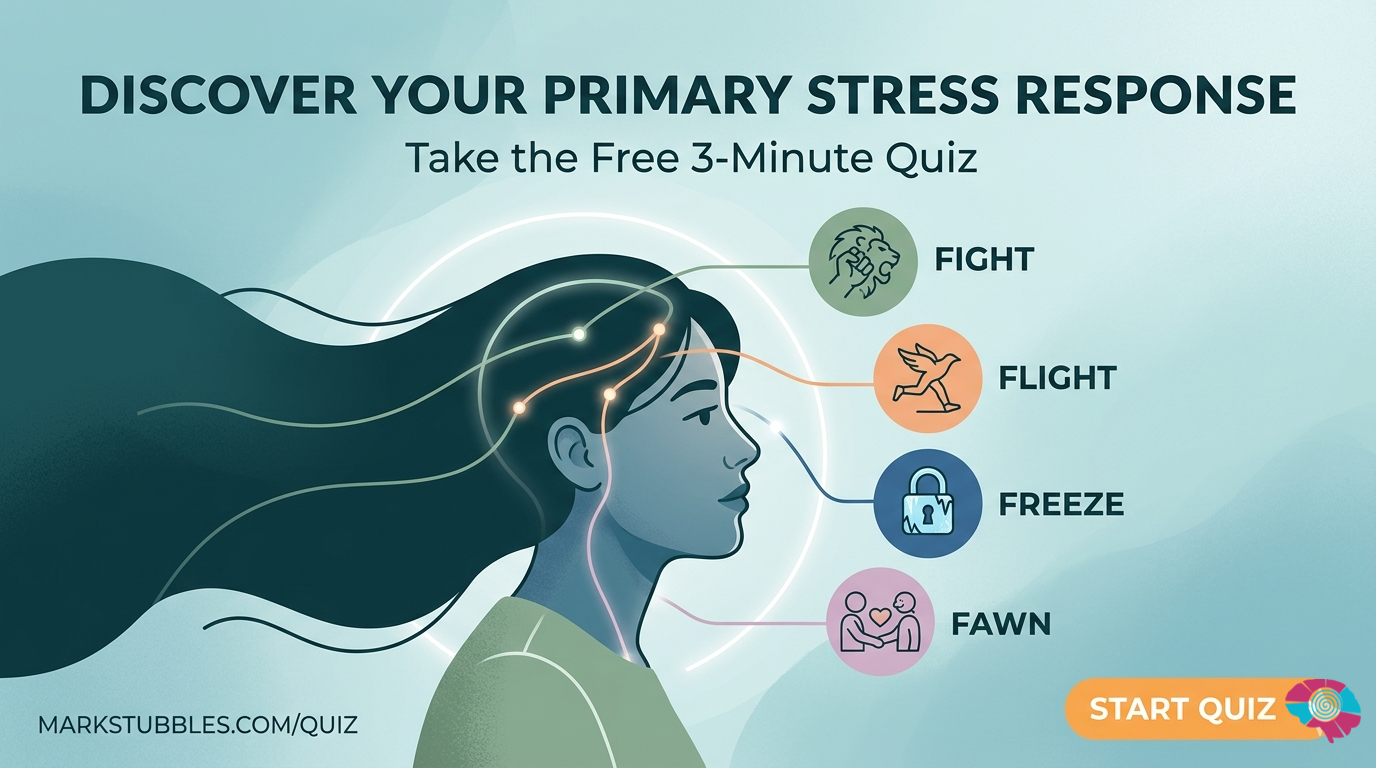
One of the most immediate practical applications of mental mastery is managing interpersonal conflict without triggering defensive alarm. Most people enter tense conversations using their threat-response system: when criticized, the amygdala fires, stress hormones rise, and the interaction descends into fight, flight, or freeze. Hypnotic language patterns, derived from Ericksonian hypnotherapy, offer an elegant alternative that calms physiological reactivity and fosters true cooperation.
Pacing Before Leading to De-escalate Autonomic Threat Responses
Pacing before leading is the art of fully validating another person’s current emotional reality before attempting to introduce a new perspective. Statements such as ‘I can completely understand why you feel frustrated given how that situation unfolded’ are not concessions or appeasement. They are strategic verbal signals that drop the other person’s defensiveness, down-regulating their threat response and opening a window for collaborative problem-solving.
Presuppositions of Capability and Embedded Commands
Language that presupposes positive capability (such as saying ‘When we resolve this challenge’ rather than ‘If you can manage to fix this’) embeds an implicit assumption of competence directly into the conversation. Similarly, framing suggestions descriptively rather than commandingly allows the listener to adopt the idea without feeling pressured. These patterns bypass analytical resistance and speak directly to unconscious cooperation.
Authentic Charisma and the Power of Unconscious Congruence
Charisma is routinely misunderstood as an innate personality trait or a performance layered over self-doubt. In truth, authentic charisma is the observable byproduct of internal congruence: the state in which your internal emotional state, your physical posture, your vocal tonality, and your spoken words are all communicating the exact same message. Human beings detect incongruence unconsciously within milliseconds. When you cultivate genuine internal safety and state management, your presence naturally projects calm authority.
Autonomic Comparison Matrix
To clearly illustrate how traditional logical mindset efforts contrast with direct unconscious reconditioning, the table below outlines key operational differences across core therapeutic dimensions:
| Metric | Traditional Logical Methods (Talk Therapy & Willpower) | Unconscious Approach (NLP & Hypnotherapy) |
| Operational Filter | Focuses heavily on conscious analytical debate, which gets filtered out by existing threat-detection models. | Communicates directly with the unconscious gatekeeper to update outdated survival models at the root. |
| Neurological Target | Maintains high activation in self-monitoring loops and the Default Mode Network through repetitive talking. | Down-regulates amygdala activity and increases executive prefrontal connectivity using structured reframing. |
| Anxiety Response | Attempts to manage or combat anxiety loops consciously, which accidentally reinforces threat vigilance. | Applies Occam’s Razor and hypnotic language to bypass analytical resistance and drop physical alarm. |
| Meaning Attribution | Intellectualises negative outcomes, leaving early childhood emotional schemas and survival roles active. | Utilises content and context reframing to alter the emotional resonance of past experiences permanently. |
Frequently Asked Questions
What is the difference between conscious mindset work and unconscious reconditioning?
Conscious mindset work operates through analytical pathways that process only forty bits of information per second and are easily blocked by established survival habits. Unconscious reconditioning communicates directly with the deeper sensory systems processing eleven million bits per second, allowing you to permanently update automatic emotional lenses.
How can I apply Occams Razor to quiet racing thoughts at night?
When experiencing an anxious spiral, your mind constructs elaborate disaster scenarios from minor triggers. Applying Occam’s Razor means identifying the observable facts and choosing the simplest, lowest-stress explanation requiring the fewest assumptions, allowing your nervous system to return to physiological rest.
How does NLP reframing help with feelings of being not enough?
Feelings of inadequacy are usually outdated protective frames installed during early childhood. NLP context reframing helps you locate environments where your unique sensitivities are profound strengths, while content reframing teaches your unconscious mind to view past setbacks as neutral feedback rather than identity flaws.
Can hypnotic language de-escalate workplace conflicts?
Yes, by using specific linguistic structures like pacing before leading, you acknowledge the other person’s reality to calm their threat response before guiding them toward a resolution. Presupposing capability and embedding requests within suggestions dissolves tension without triggering defensive arguments.
Conclusion and Strategic Recovery Pathway
Mental mastery is not a passive insight; it is an active, ongoing practice of perceptual awareness, bias literacy, and unconscious reconditioning. By understanding how your perceptual filters operate, shutting down catastrophe narratives with Occam’s Razor, and applying structured NLP reframing, you gain true authority over your emotional experience.
To explore these principles deeper across my educational guides and resources, examine these core articles:
- the truth about hypnosis – Explore the real neurological mechanics of focused attention and progressive relaxation.
- 1-to-1 hypnotherapy vs audio recordings – Compare pre-recorded downloads with live, co-regulated practitioner sessions.
- rewiring mind hypnotherapy vs psychedelic therapy – Discover how hypnosis quiets the Default Mode Network safely without chemical disruption.
- why comparing LLMs to hypnosis is bad science – Examine why statistical AI text generation differs inherently from live autonomic reconditioning.
- Master the Art of Influence guide – Master elegant hypnotic language patterns for persuasion, conflict resolution, and authentic rapport.
Ready to begin your personal recovery journey? Take the next step below:
- For self-guided body-based recovery, purchase my Unlearn Your Fear book which serves as a complete guide to healing childhood trauma root at its source.
- For structured live group work, register for my upcoming live online inner child workshop on the Inner Child Pop-up Workshop page.
- For personalized 1-to-1 hypnotherapy tailored to your specific goals, Book a free consultation call today.





Leave a Reply