
The Modern Hype of Psychedelic Assisted Therapy
In the contemporary wellness landscape, it has become virtually impossible to ignore the escalating noise surrounding psychedelic-assisted therapy. Microdosing psilocybin, taking supervised MDMA journeys, and booking five-thousand-pound ketamine retreats are frequently marketed as the ultimate shortcuts to emotional healing and cognitive freedom. Prominent research universities consistently publish clinical trials showcasing how magic mushrooms can lift severe depression, while popular podcast hosts regularly feature discussions about single experiences that supposedly dissolve years of chronic trauma overnight. This cultural surge has generated massive expectations for quick solutions among those suffering from persistent psychological distress.
This widespread conversation is precisely what prompts a critical examination of these modern interventions. Highly publicized descriptions detail how psilocybin or MDMA can safely open emotional doors, leading many people to ask whether they can achieve these exact same neurological breakthroughs without the heavy chemical agents, the substantial financial costs, or the complex legal hurdles. The short answer is yes, far more often than people realize. It is natural to look for ways to drop the critical guard of the mind, but we must understand that the human brain has native pathways designed to enter these exact same states of high receptiveness and deep relaxation naturally, without external substances.
A detailed analysis of both clinical approaches reveals that hypnotherapy and psychedelic therapy look entirely different on the surface, yet they target the exact same neurological mechanisms. Both methods temporarily quiet the rigid, defensive, and analytical networks in the human brain. Both create a valuable window of heightened neuroplasticity where long-standing patterns lose their grip. To understand how to achieve this, you can explore the truth about hypnosis to understand how the brain operates in these deeply focused states, clearing away the theatrical misconceptions associated with stage shows.
The vital difference lies in how you reach this state, how much personal agency you retain throughout the experience, and what happens to your physiology during the process. When you strip away the contemporary drug culture and examine the physical reality of the human nervous system, hypnotherapy offers the identical structural shifts without the heavy price tag, the legal grey areas, or the risk of a terrifying, uncontrollable trip that you cannot stop. By engaging the natural dreaming and focused attention states of the brain, hypnotherapy provides a reliable, accessible framework for sustainable recovery.
The Neurobiology of Change and the Default Mode Network
To appreciate why both hypnotherapy and psychedelics are so effective, it is necessary to examine how automatic stress habits become established. True change is rarely an intellectual or logical problem. You already realize, on a conscious level, that you should not freeze during a high-stakes presentation, become defensive with a loved one, or feel your heart hammer against your chest when an unexpected email arrives. The struggle persists because your analytical mind is not running the show when threat responses are triggered. Understanding that the brain prioritizes rapid survival over slow, logical reasoning is the first step toward reclaiming your peace.
Instead, the autonomic nervous system operates on automatic loops established early in life. When a trigger fires, the physical body responds long before the conscious mind has finished assessing the situation. Your stomach drops, your jaw clamps shut, your shoulders pull toward your ears, your breathing becomes shallow and restricted, and heat rapidly floods your face and neck. These automatic physical reactions are protective routines executed by your threat-detection system. Once these routines are written into your autonomic nervous system, repeating them simply hardwires them deeper, reinforcing the cycle of anticipatory anxiety.
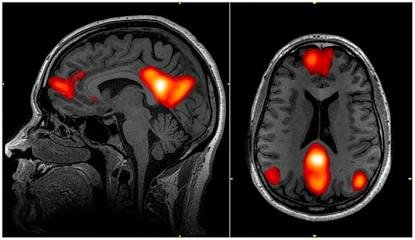
At the center of this neurological architecture is a specific cluster of connected brain regions known as the Default Mode Network, or DMN. Functional neuroimaging research has demonstrated that psilocybin temporarily quiets the DMN. In a landmark 2012 study published in the Proceedings of the National Academy of Sciences, researchers Robin Carhart-Harris and colleagues found that psilocybin reduced coordinated activity within the DMN, and that this reduction directly correlated with what participants described as ‘ego dissolution’ or a softening of their normal sense of self. This is incredibly similar to the physiological shifts achieved when working with 1-to-1 hypnotherapy vs audio recordings where direct practitioner guidance helps calm this exact self-monitoring network in a responsive, highly tailored environment.
The DMN acts as the brain’s internal narrator. It is the network responsible for writing your ongoing autobiography, maintaining your background self-criticism, and referencing past negative experiences to predict future dangers. Structurally, it consists of key hubs like the medial prefrontal cortex and the posterior cingulate cortex, working in concert to maintain a rigid, defensive sense of identity. The DMN is most active when you are not engaged in an external task. When you sit in traffic replaying an argument from several years ago, or lie awake at two in the morning anticipating everything that could go wrong tomorrow, your DMN is firing at full capacity, burning precious cognitive energy.
In a healthy, balanced nervous system, the DMN helps you plan, reflect, and organize. But in a system stuck in chronic stress, anxiety, or trauma, the DMN becomes a closed, self-reinforcing loop. It constantly scans the environment for danger, solidifies negative self-narratives, and vetoes new behavioral choices before you can even make them. It insists on keeping old, outdated defense mechanisms active because those patterns successfully kept you alive in childhood. To install a new response, you must turn down the volume on this internal narrator, quieting the DMN long enough to show the nervous system that the threat is no longer present, allowing the body to settle into natural physiological safety.
The Threat-Detection System and the Physiological Logic Gap
The core challenge of traditional recovery methods is the ‘physiological logic gap’. Because early trauma and automatic phobias are stored as autonomic physical reflexes and non-verbal memories, they bypass conscious, analytical pathways. The amygdala, the brain’s threat-detection center, initiates a physical defense response in milliseconds, long before the slower prefrontal cortex can process the logic of the situation. This explains why trying to resolve deep-seated struggles through conscious willpower, positive affirmations, and analytical talk therapy frequently hits an unshakeable wall. You cannot intellectualize your way out of a physiological response.
You cannot reason with an involuntary physical reflex. When social stress or trauma triggers hit, the unconscious mind reacts instantly, locking the body into a state of fight, flight, or freeze. Trying to stop a physical panic response with logical thoughts is like shouting at a fire alarm to stop ringing. The alarm is designed to bypass your logical consideration to ensure immediate action. To resolve the pattern, you must bypass the analytical noise and communicate directly with the deeper autonomic systems where the defensive reflex resides. Only by speaking the physical language of the nervous system can we safely re-map the reflex at its core.
This physical mechanism is elegantly explained by Stephen Porges’ Polyvagal Theory and the concept of ‘neuroception’. Neuroception is the process by which the nervous system continuously and unconsciously assesses safety or danger in the environment, operating entirely below conscious awareness. If your neuroception detects a threat, it triggers a physical cascade before your thinking mind is ever consulted. This is why you can be sitting in a perfectly safe room yet still experience your chest tightening, your heart racing, and your throat restricting. Reconditioning this autonomic layer requires a bottom-up approach, which is why the psychology of mental mastery emphasizes the importance of using non-analytical tools to speak the language of the nervous system directly, rather than intellectualizing past events.
Psychedelics and the Chemical Approach to the Brain
Psychedelic compounds like psilocybin, LSD, and ayahuasca act primarily on serotonin receptors in the brain, particularly the 5-HT2A receptor. This chemical surge triggers a massive, temporary disruption in normal brain signaling. When the Default Mode Network goes quiet under the influence of a psychedelic, the rigid boundary between the self and the environment softens. The constant, critical internal voice pauses, and brain regions that rarely communicate directly begin sharing information in a highly synchronized manner, creating an intense experience of connectedness.
This chemical disruption explains why someone on a psychedelic journey might suddenly view a traumatic childhood event without their typical defensive layers or emotional numbness. The substance temporarily knocks the defensive guard off duty, allowing the person to face memories that were previously too painful to access. However, relying on a heavy chemical agent introduces significant practical and biological trade-offs that are often downplayed in mainstream discussions.
First, there is an inherent loss of agency. Once you consume a psychedelic compound, you are committed to the experience for four to eight hours. You cannot pause the journey. If a terrifying memory surfaces or your nervous system enters an extreme panic response, you must ride it out until the drug is metabolized. This loss of control can be deeply distressing for people already struggling with high levels of anxiety, frequently leading to secondary panic loops.
Second, the chemical approach can cause biological chaos. Psychedelics force open emotional doors regardless of whether your system is prepared to handle what lies behind them. Flooding a sensitive, traumatized nervous system with intense raw material without real-time titration can lead to lasting distress, dissociation, or prolonged psychological destabilization. Additionally, legal medical-grade psychedelic therapy is astronomically expensive, often running into thousands of pounds, while unregulated sourcing carries substantial legal and health risks, leaving people vulnerable to poor quality substances and lack of clinical safety.
Finally, there is a significant integration gap. Having a profound, visionary experience does not automatically translate into lasting behavioral change. Many people experience a beautiful ‘trip’ only to find that once the chemical clears their bloodstream, their automatic physical reactions and daily anxieties return completely unchanged. Without a structured way to practice and lock in new patterns, the brain naturally defaults to its old conditioning. True recovery requires consistent, physical consolidation of safety, not just a temporary chemical vacation from the self.
Hypnotherapy and the Natural Path to Neuroplasticity
The critical truth that is frequently omitted from the psychedelic conversation is that hypnosis produces a strikingly similar neurological state, without any chemical substance involved. In 2016, a research team led by Dr David Spiegel at Stanford University School of Medicine published a landmark fMRI study in the journal Cerebral Cortex, scanning the brains of 57 people during guided hypnosis sessions designed for anxiety, pain, and trauma. The researchers pinpointed three distinct neurological shifts that occur during hypnosis, showing that the brain can achieve high neuroplasticity through natural focus.
The first shift is a significant decrease in activity within the dorsal anterior cingulate cortex. This region is the brain’s primary attention monitor and alarm system, constantly scanning the environment to decide what deserves your worry and focus. When this region quiets down, physical alarm signals subside, allowing you to become deeply absorbed without distraction or anticipatory dread. The constant scanning for environmental danger stops, allowing the nervous system to rest deeply.
The second shift is a reduced functional connectivity between the dorsolateral prefrontal cortex and the Default Mode Network. This means the analytical self-monitoring loop is temporarily disconnected. The internal critic steps back, and the constant, nagging commentary that maintains anxiety and self-doubt goes quiet. This creates a state of safe, focused receptiveness where new, calmer associations can actually land, rather than being talked over by anxious overthinking. This is the precise window where long-standing conditioning can be permanently updated.
The third shift is enhanced connectivity between the prefrontal cortex and the insula, the brain-body link responsible for processing internal physiological states. Hypnosis strengthens this direct link, allowing your executive mind to influence your physical state directly. This makes it possible to consciously lower your heart rate, warm your hands, and relax muscle tension, reconditioning automatic physiological responses on demand. By strengthening this pathway, you gain real, physical tools to regulate your own nervous system.
This Stanford study proved that hypnosis is a genuine and measurable neurological state rather than a mere performance or placebo. You can read the study details on PubMed, as referenced in my guide on understanding the real mechanics of hypnosis where I address common misconceptions about how the mind behaves during professional sessions, establishing a solid clinical foundation.
The crucial practical difference is agency. During a psychedelic session, you hand complete control of your nervous system to a chemical compound for several hours, with no ability to pause. During hypnosis, you remain fully conscious, alert, and in complete control the entire time. You can open your eyes, speak, or end the session whenever you choose, making it a safe, collaborative, and entirely self-directed process. This retention of agency is a major milestone in trauma recovery, as it directly counters the feeling of helplessness that lies at the core of all traumatic experiences.
Pacing and Control in Emotional Healing
Traditional psychiatric treatments often focus on numbing or dampening emotional intensity. While this can provide temporary relief, it frequently leaves people feeling flattened or disconnected from their lives, unable to experience genuine joy or connection. Psychedelic therapy works in the opposite direction, heavily magnifying emotional importance and lowering defensive guards. This can result in a sudden, overwhelming flood of stored emotional pain, which can be highly destabilizing for a sensitive, highly alerted nervous system, occasionally resulting in severe hyperarousal.
Hypnotherapy operates on the same principal of accessing deeper emotional layers, but with a critical difference in how intensity is managed. A skilled hypnotherapist utilizes a process called titration, meaning the work is paced incrementally. We guide the nervous system to process a manageable amount of emotional material at a time, keeping you safely grounded in physical reality throughout the process. This slow, deliberate pacing allows the nervous system to integrate each shift before moving to the next level of work.
There is absolutely no risk of a destabilizing, hours-long emotional flood, because your conscious mind remains active and can signal when the pace needs to slow down. Think of the difference between opening a pressure valve gradually versus blowing the valve off entirely. Both release the internal pressure, but titration gives you complete control over the rate of release, preventing re-traumatization and building authentic, sustainable safety. For a sensitive system, this control is not a convenience; it is the absolute foundation of therapeutic progress.
This titrated pacing is exceptionally valuable for deep, delicate processes like inner child healing where early emotional wounds and survival-driven self-criticism must be met with patience, co-regulation, and stability, rather than forced chemical exposure, ensuring the child inside feels genuinely safe.
Precision Reprogramming in Everyday Life
The primary clinical advantage of hypnotherapy over chemical disruption is its precision. Rather than throwing open every door in your mind simultaneously and hoping for a positive outcome, hypnotherapy targets specific automatic responses and works through them systematically in a structured, custom environment. This targeted approach allows us to dismantle specific fears, phobias, and emotional patterns without disrupting your entire psychological landscape.
Consider how an automatic social anxiety response operates in real life, especially for those dealing with specific physical triggers like blushing or sudden panic. First, a trigger occurs, such as stepping up to speak or having eyes turn to you in a meeting. Second, an automatic physiological cascade is initiated, where the brain interprets the visibility as a threat, jumping your pulse, locking your breathing, and flushing your face with adrenaline. Third, the conscious mind rationalizes this physical shift with a negative narrative, such as ‘I am losing control, everyone can see it’, which feeds the alarm and intensifies the physical trigger, keeping you trapped in a highly distressing loop.
In hypnotherapy, we break this feedback loop using targeted physical calibration. We first guide the body into absolute safety, lowering the heart rate, slowing the breathing, and establishing a calm physical state. Once this safety is anchored, we introduce the mental image of the trigger. Because the analytical narrator is quieted, the brain experiences the trigger while the body remains entirely calm, neutralizing the automatic panic link at its root. This is a practical, body-based application of NLP reframing and language structures to reprogram how the mind and body communicate under pressure, changing the internal landscape without pharmacological disruption.
Through this focused repetition, the nervous system unlearns the fear response and adopts a new automatic habit. In real-world situations, when people look at you, your shoulders naturally drop, your breathing remains deep, and your vascular system stays calm. The physical response settles down because the perceived threat of judgment has been systematically removed. This is not about managing symptoms; it is about updating the automatic reflex so that the stress response never triggers in the first place, restoring your natural confidence.
A Clear Comparison of Both Methods
To help you evaluate which approach is most appropriate for your current needs and long-term recovery, review this direct, evidence-grounded comparison table:
| Consideration | Psychedelic-Assisted Therapy | Practitioner-Led Hypnotherapy |
| Legal Status | Heavily restricted, illegal in many countries, or limited to specific clinical trials. | Fully legal and widely accessible worldwide without regulatory hurdles or travel requirements. |
| Average Cost | High investment, often ranging from £1,500 to £5,000+ for a single clinical protocol. | Standard professional rates, highly cost-effective and adaptable to your personal recovery goals. |
| Safety & Risks | Spikes blood pressure and heart rate; risk of terrifying trips, psychosis, or prolonged destabilisation. | Completely safe, natural physiological state with zero pharmacological risks or cardiovascular side effects. |
| Pacing & Control | Loss of agency for 4 to 8 hours; risk of rapid, overwhelming emotional flooding that cannot be paused. | 100% titrated pacing; you remain fully conscious, in complete control, and can pause the process instantly. |
| Practical Integration | Requires separate integration sessions to translate drug experiences into daily behavior changes. | Integration is built directly into every session, reinforcing new physical safety loops in real-world contexts. |
Conclusion and Strategic Recovery
Psychedelic research has done the mental health community a massive service by demonstrating how vital it is to quiet the Default Mode Network and access deeper states of neuroplasticity. But you do not need to take a drug to access these states. Your brain already possesses the natural, built-in physiological machinery required to turn down the inner critic, process old trauma safely, and install new automatic responses, allowing you to regain complete confidence naturally.
If you are looking for a highly unpredictable, costly, and legally complex experience that might offer brief glimpses of insight, psychedelics provide that path, along with all associated physical risks. But if you want a safe, precise, legal, and highly reliable method to resolve automatic fear responses, heal early childhood wounds, and regain absolute control over your physical state, hypnotherapy delivers these results directly. It translates scientific neurobiology into a practical, repeatable skill.
You do not have to keep relying on generic tools or chemical shortcuts that leave you feeling frustrated. By addressing the root cause in a structured, responsive environment, you can permanently neutralize outdated threat patterns and step into an authentic, self-directed life, enjoying genuine, lasting freedom.
If you are ready to update the automatic fear response and take back control, let’s talk. You can Book a free consultation call today to discuss your specific goals in a secure, relaxed conversation held over Google Meet.
For a complete physical toolkit to resolve anxiety and blushing, you can purchase my Unlearn Your Fear book which serves as a complete guide to healing childhood trauma root and unlearning unconscious fear patterns book at its source.
If you prefer a structured group setting to heal old emotional wounds and break people-pleasing loops, join my upcoming live online inner child workshop or register for an interactive inner child workshop on the Inner Child Pop-up Workshop details page.
Frequently Asked Questions
Can hypnotherapy achieve the same results as psychedelic therapy?
Yes, brain scans from Stanford University prove that hypnosis produces a strikingly similar neurological shift to psilocybin. By quieting the Default Mode Network and reducing activity in executive control and self-monitoring regions, hypnotherapy creates a safe window of neuroplasticity to reprogram automatic fear responses without using any chemical substances.
What are the main disadvantages of psychedelic-assisted therapy?
Consuming psychedelic compounds carries significant risks, including a total loss of agency for several hours and the danger of emotional flooding or lasting dissociation. Furthermore, regulated clinical retreats are astronomically expensive, carry heart or blood pressure risks, and often fail to translate into permanent behavioural changes once the drug clears your system.
How does hypnotherapy safely prevent emotional flooding during trauma work?
Unlike psychedelics, which force open emotional doors without warning, hypnotherapy operates on the principle of titration. A skilled hypnotherapist paces the work incrementally, establishing strong physical safety anchors first so that your unconscious system processes memories at a manageable rate while you remain fully awake and in control.
Is hypnotherapy a legal and safe alternative to psychedelics?
Yes, hypnotherapy is fully legal worldwide, has no medical contraindications, and can be conducted securely online via Google Meet. It relies entirely on your brain’s native physiological ability to enter focused states of attention, making it universally accessible and safe





Leave a Reply