Hypnotherapy to Stop Blushing: Online Erythrophobia Specialist
Master Guide to Overcoming Social Anxiety Reclaiming and Increasing Confidence
My Journey to Freedom from Blushing
For decades, the slightest chance of social interaction filled me with dread, creating a relentless cycle of self-consciousness where every conversation felt like a potential minefield of exposure.This was not a subtle, passing flush. It was a fiery, all-consuming redness that would rapidly consume my face, neck, and ears, often at the most inopportune moments. It became a major obstacle in my career and personal life, fueling a relentless pattern of anticipation. I started to dread every meeting, every casual conversation, and even brief exchanges with strangers. This constant vigilance became a self-fulfilling prophecy, and to cope with the daily humiliation, I began to withdraw, finding solace in complete isolation. Working from home offered a temporary reprieve from public scrutiny, but it ultimately served to shrink my world, dissolve my friendships, and make romantic relationships feel almost impossible to navigate.
It is a strange thing to pinpoint the exact origin of something so deeply ingrained, but most people who struggle with chronic blushing can trace it back to a specific moment. For me, it was a throwaway comment made when I was a teenager. Someone pointed out, with what they probably thought was light humor, that my face had gone red. For an already anxious and self-conscious young man, that comment landed like a seed in fertile ground. Being naturally fair-skinned meant I was already predisposed to flushing easily, but now I was actively searching for it, anticipating it, and that constant, daily vigilance made the problem many times worse.
My mind quickly became a relentless replay machine, constantly revisiting past moments of blushing in a torturous cycle of rumination. I would replay embarrassing encounters for hours, dwelling on the physical heat in my cheeks, the imagined stares, and the potential judgments of others. Then, my thoughts would spiral into future anxieties, wondering what colleagues would think if my face turned red during a meeting, or if they would interpret my flush as a sign of lying or attraction. This mental rehashing created a powerful, persistent anticipatory anxiety that guaranteed the very reaction I dreaded the moment I entered a similar social setting.
Why You Blush (The Autonomic Hijack)
If you blush chronically, you already know that telling yourself to stop does not work. You have tried calm breathing in the moment, positive self-talk, and rehearsing conversations in advance. You may have worn heavier layers, avoided bright lighting, or structured your entire social life around safe situations. Yet, none of it reliably stops the flush. The most important thing to understand about chronic blushing is this: it is not a thinking problem. It is a nervous system problem. No amount of rational reasoning can override an autonomic, physical response, any more than you can consciously lower your heart rate in the middle of a sudden fright.
Blushing is an involuntary, biological reflex controlled by your autonomic nervous system. When your brain perceives a social threat (such as the possibility of judgment, scrutiny, or embarrassment), a process begins that bypasses your conscious prefrontal cortex entirely. The amygdala, the brain’s threat-detection center, reads social danger the exact same way it reads physical danger in the wild. Before you have had time to form a single logical thought, it fires a survival signal through your sympathetic nervous system, instructing your body to prepare for battle.
Under normal physical stress, the sympathetic nervous system constricts blood vessels to divert oxygenated blood to your major muscle groups. However, your face is a glaring exception to this biological rule. Under social stress, the blood vessels in your cheeks and neck do not constrict. Instead, they dilate, rushing hot blood directly to the surface of your skin. The whole sequence, from the unconscious threat detection to the visible flush, occurs in milliseconds. By the time your conscious mind notes what is happening and begs your face not to go red, the blush is already fully formed. The blush does not wait for conscious permission; it is an involuntary physical reaction rooted in a primitive survival program.
This explains why traditional talk therapy frequently hits a wall when treating a blushing phobia. Learn how hypnotherapy and talk therapy compare for blushing. While analyzing your past or identifying negative cognitive patterns is highly valuable, it rarely stops the physical flush. This happens because talk therapy is a top-down approach, attempting to use the rational, conscious mind to control an involuntary autonomic reflex. But because you cannot reason with a reflex, trying to talk yourself out of blushing is the wrong tool for the job. To break the cycle, you need a bottom-up approach that communicates directly with the unconscious and the nervous system, establishing a profound, automatic baseline of safety so the threat alarm never fires in the first place.
The Conditioned Loop of Social Panic
To understand why hypnotherapy is so uniquely effective here, it helps to look at the mechanical rules your subconscious plays by. Your chronic blushing operates as a conditioned reflex, running on the exact same neurological pathways discovered by the Russian physiologist Ivan Pavlov in his famous research with dogs. Pavlov paired the sound of a bell with the presentation of food, and eventually, the dogs salivated automatically at the sound of the bell alone, without any food present. At some point in your life, your mind made a powerful, subconscious connection between social visibility and the threat of shame or rejection. From that moment on, your nervous system began triggering the blush response automatically. The social situation became your bell, and the facial flushing became your involuntary salivation.
This conditioning explains why you can blush before anything has even happened. Just being told that you will have to speak in a meeting next week is enough to trigger the response. Your mind runs ahead of reality, rehearsing the threat, and your physical body responds as if the disaster is already occurring. This is anticipatory anxiety, and the physical bracing and temperature monitoring it causes are themselves stress responses that raise your baseline anxiety, making the blush far more likely to peak. Over time, a secondary fear develops: the fear of blushing itself. You walk into rooms not just anxious about what you have to do, but hyper-focused on your own face, already bracing for the first sign of warmth.
Trying to suppress this response through sheer willpower and self-monitoring is like trying to hold a beach ball underwater. You can push the beach ball down and keep it submerged through intense, exhausting physical effort, but the moment your attention drifts or your energy runs out, it shoots back up into the air with twice the force. The harder you fight the physical sensation of the blush, the more dramatic the rebound. This is because your conscious resistance tells your subconscious mind that the situation is incredibly dangerous. It reads your panic as proof of a threat, firing a fresh wave of adrenaline that intensifies the physical heat. The solution is not to push the beach ball down harder; it is to let it float, which deprives the panic loop of its neurological fuel.
We can map this self-reinforcing pattern through the Cycle of Fear, illustrating how the physical reaction feeds back into the subconscious threat system:
- Social Situation Arises: You enter a conversation, a meeting, or a public setting where you feel visible.
- Subconscious Threat Detected: Your amygdala reads the social cue as an immediate danger signal, bypassing conscious awareness.
- Sympathetic Nervous System Fires: Your fight-or-flight response activates, releasing adrenaline and dilating the blood vessels in your cheeks.
- Blush Occurs: The physical blush appears on your face, neck, or ears, completely independent of your conscious desire.
- Awareness and Shame Spike: You notice the physical heat. Your intense embarrassment tells your system the danger is real, intensifying the flush.
- Fear of the Next Blush: You begin worrying about when this will happen again, and that anticipatory worry becomes your next subconscious trigger.
When Blushing Starts to Run Your Life
There is a critical point at which blushing stops being a minor inconvenience and starts writing your life story for you. This is what distinguishes occasional, normal flushing from pathological blushing, often termed erythrophobia or idiopathic craniofacial erythema. When you suffer from erythrophobia, you quietly make your world smaller to stay safe. You turn down professional promotions because you cannot face the presentations that come with them, you choose quieter roles than you are capable of holding, and you avoid social situations where you might draw attention. The constant background monitoring erodes your self-belief, leaving you with a deep, exhausting sense of isolation.
In any social interaction, your mind is running a constant background process, scanning for facial warmth, rehearsing exits, and anticipating visible shame. This internal monitoring is exhausting, and it destroys your presence. Because part of your attention is always turned inward, you cannot fully listen, be spontaneous, or connect authentically. You lose access to yourself in conversation. To break this loop, we must recondition your automatic focus, shifting your attention from internal physical monitoring to external engagement. The goal is to move from a state of resistance to a state of genuine unconcern, where you are simply more interested in the conversation than in your own face.
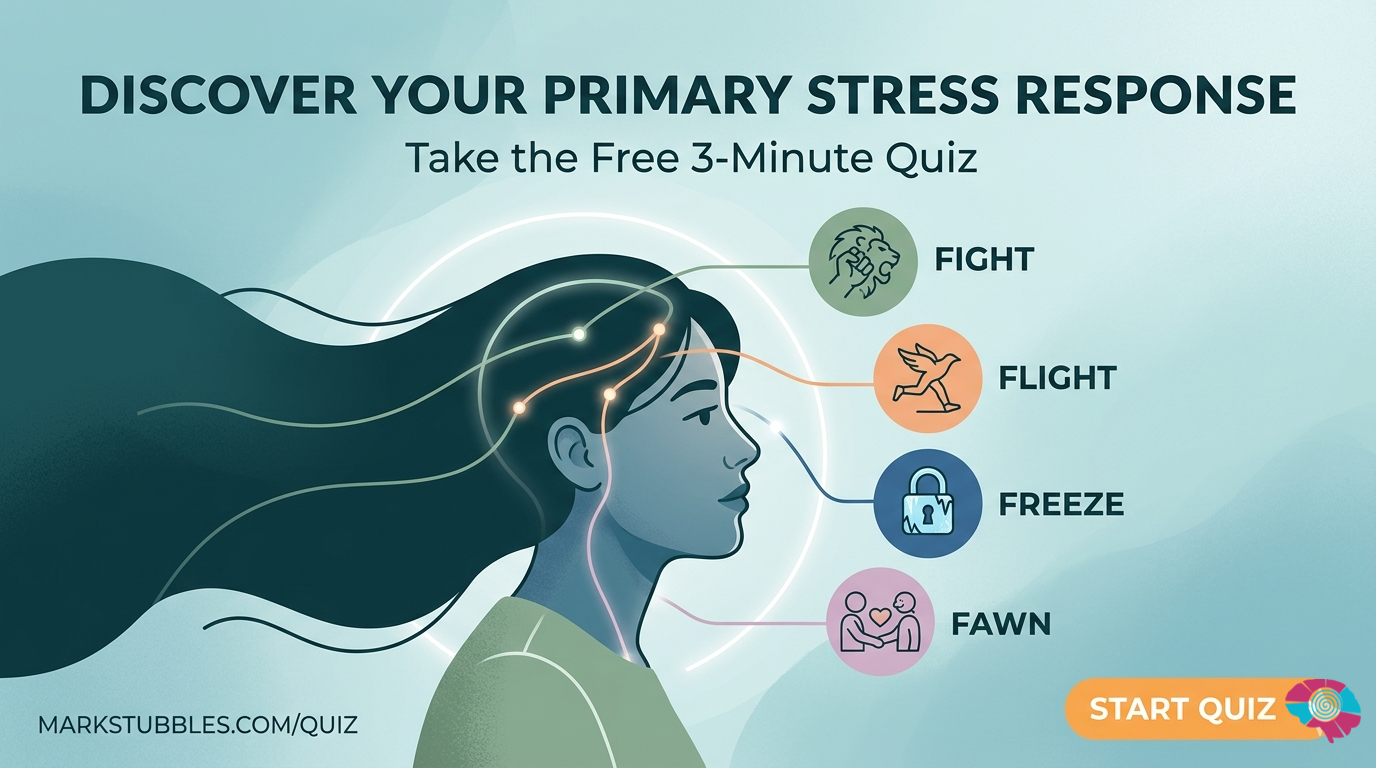
It is also important to recognize that blushing is not a one-size-fits-all condition. Every blush has a different underlying root: for some, it is tied to a fear of judgment; for others, it is connected to a childhood environment where expressing feelings or setting boundaries felt unsafe. To help you identify what is driving your specific response, a quick, two-minute quiz is available. You can identify your specific blushing pattern and see what tends to work best for it on my blushing in professional settings page, find out what is really driving your blushing here.
Take the First Step Towards a More Confident You.
I offer a free, no-obligation consultation call where we can discuss your specific challenges and explore how hypnotherapy can help you regain control, build confidence, and finally feel comfortable and at ease in social situations.
Schedule your free consultation call today.
Don’t let blushing and social anxiety hold you back from living a full and vibrant life. Take that first step towards freedom. I’m here to support you on your journey.
Find Out How You Can Overcome the Fear of Blushing with an Expert Erythrophobia Specialist
Book Your Free Call Below
Hypnotherapy vs. Medical Interventions
Many people who seek out hypnotherapy have already spent years attempting to manage their blushing through medical approaches. The most commonly prescribed medical option is beta-blockers. While beta-blockers can temporarily reduce the physical symptoms of anxiety by blocking the effect of adrenaline on the body (such as slowing a racing heart or reducing a tremor), they carry significant limitations. They do not address the internal, unconscious script that triggers the adrenaline in the first place, nor do they reduce social anxiety. When the medication wears off, the underlying conditioned response remains exactly as it was. They are a temporary management tool, not a permanent resolution, and are often unsuitable for individuals with asthma or certain heart conditions.
Some people even consider surgical options, such as Endoscopic Thoracic Sympathectomy (ETS), which involves severing the nerve pathways responsible for facial flushing. ETS is an irreversible, high-risk surgical procedure that frequently causes severe compensatory sweating in other areas of the body, and is widely considered an extreme last resort. Hypnotherapy works differently because it addresses the problem earlier in the chain. Rather than attempting to block the physical expression of adrenaline after the alarm has been tripped, hypnotherapy updates the unconscious map so that the threat signal is never triggered in the first place.
| Feature | Beta-Blockers | Cognitive Behavioral Therapy (CBT) | Unconscious Hypnotherapy |
|---|---|---|---|
| Primary Target | Temporary physical adrenaline surge only | Conscious thoughts, core beliefs, and pre-event worry spirals | Unconscious triggers and automatic autonomic nervous system pathways |
| Addresses Root Cause | No, merely masks the physical symptoms of anxiety | Partially; addresses cognitive habits but struggles to reach somatic reflexes | Yes, updates the original conditioned survival associations in the brain |
| Typical Timeframe | Instant temporary effect, but requires lifelong ongoing use | Typically 14 to 16 sessions over approximately 4 months | Highly rapid; most clients see a significant shift in 1 to 3 sessions |
| Resolves Physical Blushing | No, the blood vessels may still dilate if emotional triggers are intense | Not usually, the automatic physical flush fires faster than conscious thoughts can intervene | Yes, calms the autonomic alarm system so the physical reflex does not fire |
| Risks and Side Effects | Dizziness, fatigue, cold extremities, and risks for individuals with asthma | None known, though can require immense conscious effort and cause frustration when reflexes persist | None known; utilizes natural, deeply relaxing states of focused attention |
Accessing Unconscious Safety with Hypnotherapy
Because chronic blushing is a learned, automatic response, it cannot be resolved through conscious willpower. The unconscious mind builds its map of the world from experience, particularly from our early years. Moments of public embarrassment, intense family criticism, or covert enmeshment, where expressing our boundaries or independence felt unsafe, can leave lasting physical impressions. The child’s brain lacks the logical resources to contextualize these events, so the unconscious writes a protective script that reads: being seen is dangerous. The adult mind knows there is nothing to fear in a staff meeting, but your unconscious has not received the update.
Hypnotherapy bridges this gap by accessing the unconscious mind in a natural state of focused relaxation. During our normal waking hours, our brains operate predominantly in beta waves, the frequency of alert, critical analysis and the inner critic. In this state, our unconscious defenses are on high guard. Hypnosis gently downshifts brainwave activity from waking beta waves down to relaxed alpha and highly receptive theta waves, which are associated with deep relaxation and dreaming. By accessing this receptive frequency, we can bypass the critical analytical barriers of the conscious mind and communicate directly with the unconscious space where the original survival scripts are stored. Discover whether a recording or one-to-one sessions suit you better.
This bottom-up approach is fully supported by modern neuroscience. A landmark neuroimaging study conducted by Stanford University School of Medicine researchers, led by psychiatrist Dr. David Spiegel, scanned the brains of subjects during hypnosis using functional magnetic resonance imaging (fMRI). While this study investigated the general state of hypnosis rather than blushing specifically, its findings support the broader mechanism of how we downregulate the nervous system’s survival alarm. The researchers observed a significant decrease in activity within the dorsal anterior cingulate cortex (dACC), the brain’s physical alarm system and threat-monitoring hub, specifically in thirty-six highly hypnotisable subjects, though this change was not seen in twenty-one subjects who scored low on hypnotisability. This neurobiological shift demonstrates that, for those who are receptive to the state, hypnosis can quiet the central alarm, which in turn can decrease the sympathetic signals sent to your blood vessels, helping the physical blushing response to dissolve.
In our hypnotherapy sessions, we use this relaxed state to safely update your internal map of safety. We use metaphors, physical safety signals, and visual re-scripting to show your unconscious that the past danger has passed and that it is safe to be seen. Through a biological process known as memory reconsolidation, we recall early stressful associations from a state of physical safety, stripping away the old emotional sting and archiving those memories as past history rather than active alerts. When the unconscious script is updated, the automatic blushing reflex loses its trigger, leading to durable, long-term change without requiring ongoing conscious willpower to maintain.
Five Ways to Manage a Blushing Episode in the Moment
While hypnotherapy works to resolve the underlying conditioned pattern, it is highly useful to have practical, body-based tools to manage an acute episode when it catches you off guard. These are not cures, but they function as physical stabilizers to reduce the intensity and duration of a flush while you do the deeper unconscious work:
- The Cooling Breath: When a blush starts, the natural instinct is to panic or hold your breath, which restricts oxygen and worsens the flush. Instead, place your tongue gently against the roof of your mouth just behind your front teeth and breathe in slowly through your nose for a count of four. Hold the breath for a count of four, then exhale slowly through slightly pursed lips for a count of six to eight, focusing on making the exhale feel cool, as if you are gently blowing on hot soup. This extended exhalation stimulates your vagus nerve and shifts your nervous system away from sympathetic fight-or-flight dominance.
- Dual Pressure Points: Discreetly press your tongue firmly against the roof of your mouth while simultaneously pressing your thumb into the center of your opposite palm, specifically the fleshy area between your thumb and index finger. Hold this steady pressure for fifteen to thirty seconds while maintaining steady, deep abdominal breaths. This physical contact interrupts the acute threat signals your brain is sending to your cardiovascular system, taking the edge off the flushing response before it peaks.
- Temperature Contrast: Keep something cool to hand, such as a metal pen, a water bottle, or your phone when it is not warm from use. When you feel a blush starting, touch the cool surface to your inner wrists or the back of your neck, which are areas where blood vessels sit closest to the skin. This competing sensory signal provides your nervous system with new physical data to process, immediately interrupting the localized heat response.
- Redirect Attention Outward: The moment you turn your attention inward to monitor your cheeks, you feed the anxiety loop. When you feel a blush coming, deliberately engage your hands: gesture as you speak, pick up a pen, or reach for a glass. Simultaneously, shift your mental focus entirely outward. Name five things you can see in the room, or focus on the exact words and tone of the person speaking to you. This outward shift deprives the internal self-monitoring loop of its processing power.
- Acknowledge and Move On: This sounds counterintuitive, but trying to hide or fight a blush only creates the physical tension that sustains it. Instead of resisting, briefly acknowledge the sensation internally: ‘I feel my face running hot, and that is just my nervous system doing its thing.’ If the situation allows, a brief, matter-of-fact statement out loud, delivered without apology, completely defuses the shame that fuels the panic: ‘I always blush when I get passionate about a topic, let’s proceed.’ Bringing the secret into the open instantly strips away its power.
Frequently Asked Questions: Online Hypnotherapy for Blushing
Q: How does hypnotherapy stop involuntary blushing?
A: Hypnotherapy works directly with the unconscious mind to interrupt the automatic stress response that causes facial flushing. When you experience chronic blushing, your sympathetic nervous system triggers a fight-or-flight response before your conscious mind can intervene. Hypnosis helps retrain this automatic reaction, lowering anticipatory anxiety and allowing your nervous system to stay calm in social or professional settings.
Q: Why can't I stop blushing using willpower or logic?
A: Blushing is an involuntary physical response controlled by the autonomic nervous system. Trying to force yourself not to blush creates inner tension and self-monitoring. This monitoring signals danger to your survival brain, which releases adrenaline and actually increases flushing. Hypnotherapy bypasses conscious effort to change the pattern at the level where the reaction originates.
Q: How many online hypnotherapy sessions are typically needed to see results?
A: Many clients notice a significant shift in their blushing response within 1 to 3 sessions. Because chronic blushing is driven by a learned unconscious pattern, addressing the root trigger and retraining the nervous system can create rapid changes compared to traditional talk therapy.
Q: Is online hypnotherapy for blushing as effective as in-person sessions?
A: Yes. Online hypnotherapy via video call is fully as effective as in-person sessions for addressing blushing and social anxiety. Being in your own familiar, comfortable environment during an online session often makes it easier to enter a relaxed state, allowing the unconscious mind to process and integrate new responses smoothly.
Q: How are the online sessions conducted?
A: Sessions are conducted one-on-one via Google Meet. You simply need a quiet, comfortable place where you will not be disturbed, a stable internet connection, and a screen where we can see and hear each other clearly.
Q: Will hypnosis make me completely stop blushing forever?
A: Blushing is a normal human physiological response to extreme heat, exercise, or genuine modesty. The goal of hypnotherapy is not to eliminate your body’s natural physiological ability to flush, but to eliminate pathological blushing (erythrophobia)—the uncontrollable, inappropriate blushing caused by social anxiety, anticipatory fear, and automatic threat perception.
Client Testimonials, Products, and Booking Your Consultation
I have worked through this painful struggle myself, and I have helped hundreds of others do the exact same. You do not have to live inside a self-imposed prison of social fear any longer.
What My Clients Say:
“Mark is great! I have to say I was a bit skeptical at first, but I knew I needed help shifting a few lingering and unhelpful beliefs about myself that have their root in childhood. I wasn’t taking action in my business and was feeling stuck and getting depressed about it, to be honest. The sessions managed to release a lot of unhelpful emotions and blockages and allowed me to feel more myself again. I’ve noticed increased confidence and more drive to move my business forward.”
“Anxiety Hypnotherapist was fantastic, just what I needed. Thanks so much to Mark Stubbles, he’s brilliant and very helpful, accommodating and supports you every step of the way with life’s little ups and downs…”
Not Ready to Book a Session? Start Here:
- Free Hypnosis Recording on YouTube: Access my free, dedicated blushing hypnosis session on YouTube to experience this gentle state of relaxation at home with no pressure.
- Online Course: Explore my low-cost, self-paced Quick & Easily Stop Blushing Online Course which walks you through the exact same NLP and cognitive tools I use in my one-to-one sessions.
- Beyond Blushing Book: Purchase the e-book directly from my website or in paperback on Amazon. Explore the psychology behind blushing and get a complete roadmap to freedom: Beyond Blushing eBook.
| You don’t need to have your nervous system ‘figured out’ to book this call. When your threat detection system is on high alert, even reaching out feels like a survival risk. I’ve worked through this myself, and I’ve helped others do the same. This free 15-minute consultation is a zero-pressure, confidential space where you do not have to recount or relive any painful details of your history. We will simply map your current physical blushing triggers, look at your situation, and see if an unconscious-level update is the right path for you. • No verbal disclosure of past history required. • Conducted safely online from the comfort of your own home. |