
If the thought of a dental appointment turns your stomach days before you even sit in the chair, you already know that advice like “just relax” or “it will not hurt” is completely useless.
I have never met anyone who enjoys visiting the dentist. There would be something unusual about you if you enjoyed a stranger poking around in your mouth with sharp metal instruments. Fear is a protective response that your physical body has learned, and like anything learned, it can be unlearned.
There is a distinct difference between mild nervousness and true dental phobia, clinically known as odontophobia. Most people feel a slight flicker of tension before a routine cleaning or a filling. That is ordinary, manageable discomfort. Dental phobia is something else entirely. It is an overwhelming, paralysing dread that governs your choices.
Dental phobia is the appointment you cancel three times in a row. It is the sleepless night spent staring at the ceiling forty-eight hours beforehand, the racing heart in the waiting room, and the tears you cannot explain to the hygienist. For many people, it is severe enough that they avoid the dentist for five, ten, or even twenty years, suffering through severe toothache, visible decay, and chronic infections rather than stepping through the clinic door.
The Hidden Cost of Shame, Avoidance, and Social Isolation
The physical impact of avoiding dental care is obvious, but the emotional cost is often far heavier. Dental phobia rarely exists in a vacuum. It almost always brings a heavy secondary layer of shame and secrecy.
When you avoid the dentist due to fear, small problems naturally compound over time. A minor cavity that needed a simple filling turns into a complex root canal or a broken tooth. As the physical damage becomes visible, embarrassment takes hold. You begin hiding your smile behind your hand when you laugh, choosing meals based on what side of your mouth hurts the least, or declining social invitations altogether.
People in this position often carry an intense fear of judgment. They worry that the dentist will lecture them, express disgust at the condition of their teeth, or criticise them for staying away for so long. This creates a destructive loop where fear causes avoidance, avoidance leads to worsening dental issues, damage creates deep embarrassment, and embarrassment reinforces the urge to stay away.
It is critical to realise that avoidance is a direct symptom of the phobia itself, not a flaw in your character. Dental professionals see fearful patients every day, and the shame you feel is part of the anxiety pattern, not a reflection of your worth.
The Sensory Triggers of Dental Office Anxiety
The dental clinic environment is unique because it engages every single physical sense simultaneously with inputs that the human nervous system naturally interprets as danger. Understanding why these inputs trigger panic helps demystify your body’s reaction.
Auditory Triggers and High-Frequency Fear
The high-pitched whine of the dental drill is one of the most powerful anxiety triggers in medical care. The sound operates at a frequency that naturally pierces through concentration. For someone with dental phobia, hearing that sound in the waiting room causes an instant spike in adrenaline before any treatment has even started.
Visual Triggers and Clinical Threat Signals
Bright overhead lights beaming directly into your eyes, tray tables loaded with metallic instruments, syringes, and sharp probes all send immediate threat signals to the brain. The sight of a needle or even the dentist putting on latex gloves can be enough to trigger a full physical panic response.
Olfactory Triggers and Emotional Memory Recall
The smell of a dental office is unmistakable. The distinct mixture of antiseptic, chemical bonding agents, and clove-based compounds (eugenol) hits the olfactory system immediately. Smell is directly linked to the brain’s emotional centres, meaning a single breath of clinic air can instantly recall terrifying memories from childhood or past visits.
Position and Spatial Vulnerability in the Chair
Being reclined flat on your back in a hydraulic chair places you in a physically vulnerable position. Your neck is exposed, a stranger is leaning directly over your face, and your primary defense mechanisms are completely removed. From an evolutionary perspective, lying flat while trapped in an enclosed space with an unfamiliar person overhead triggers primitive survival instincts.
Tactile Sensations and Involuntary Reactions
The vibration of the drill transferring through your jawbone, cold water spray, suction tubes resting on your tongue, and the feeling of hands inside your mouth all contribute to a feeling of total powerlessness. You cannot speak, you cannot easily swallow, and you cannot signal discomfort without feeling like you are interrupting a delicate procedure.
The Fight-or-Flight Response and Autonomic Hijacking
When you sit down in a dental chair and your phobia activates, your brain cannot tell the difference between a routine cleaning and an actual physical attack.
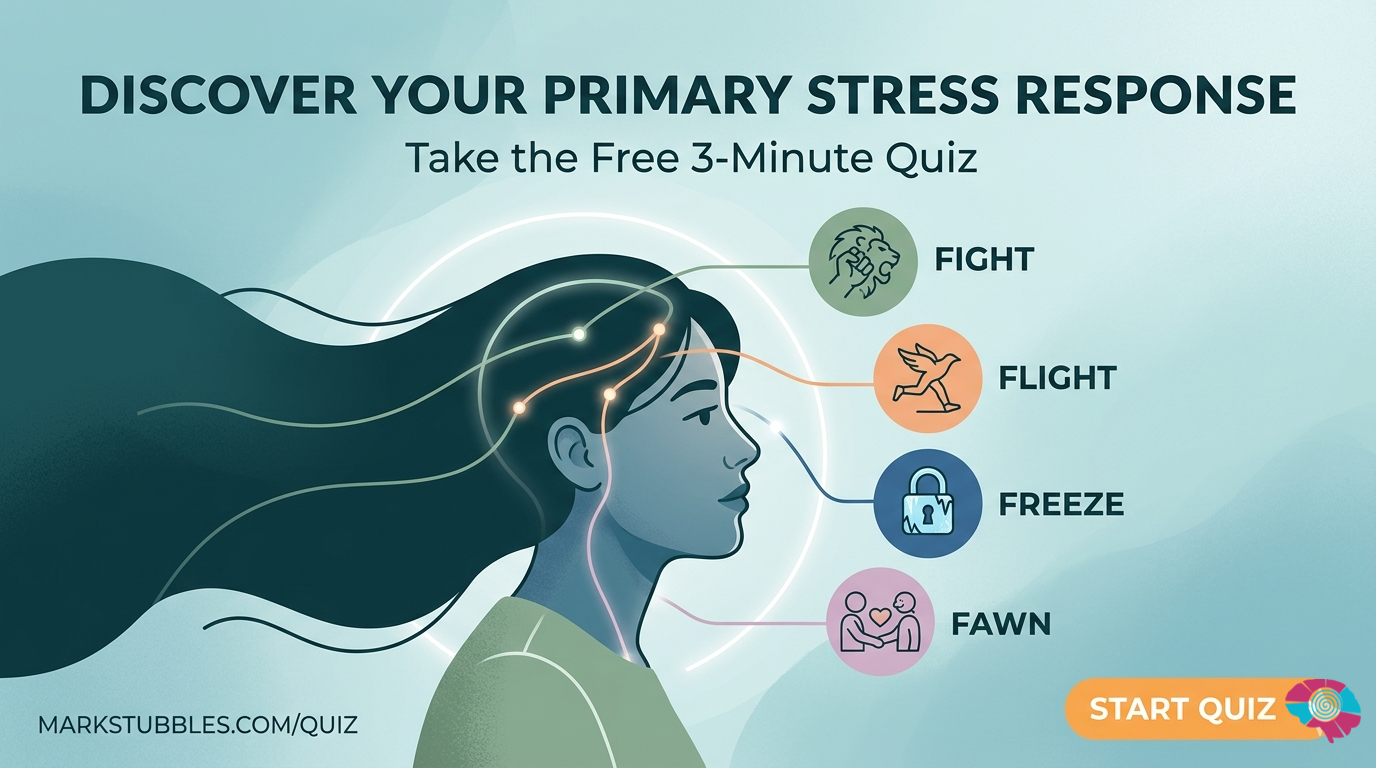
The amygdala, which operates as your brain’s early warning system, fires first and asks questions later. Your heart rate climbs rapidly. Your breathing turns shallow and moves high into the chest. Your muscles lock up across your shoulders and legs, preparing your body to fight or run. This is classic fight-or-flight activation. Once it takes hold, you are operating strictly from the survival part of your nervous system rather than the logical, reasoning part.
This is why telling yourself to “just calm down” fails completely in the moment. The instruction comes from your conscious mind, but the physical reaction was handed over to a faster, automated system that does not process logic when it believes safety is threatened. You cannot out-reason a nervous system that has already concluded you are in danger. I have written in detail about how nervous system hijacking works and what to do when panic strikes, and that exact physiological mechanism takes over the moment the dental chair begins to recline.
There is also a critical timing issue that explains why standard coping mechanisms fall short in the chair. The hijack response fires in a fraction of a second. By the time you consciously recognise that you are panicking, your body has already flooded your bloodstream with stress hormones like adrenaline and cortisol. Any strategy that relies on catching the fear early and trying to rationalise it is fighting against established biology.
If you have been avoiding the dentist for months or years, you do not need to force yourself through it using sheer willpower. You can book a free consultation with me to discuss neutralising the fear response before your next visit. An automatic response can be unlearned. If the fear was established through past experiences, bad appointments, or chronic anxiety, it can be addressed at the root level without endless struggle.
The Physical Cost of Anticipatory Tension and Bruxism
Dental phobia rarely waits for the day of the appointment to cause distress. For most people who struggle with this fear, the physical symptoms begin days or weeks before the scheduled visit.
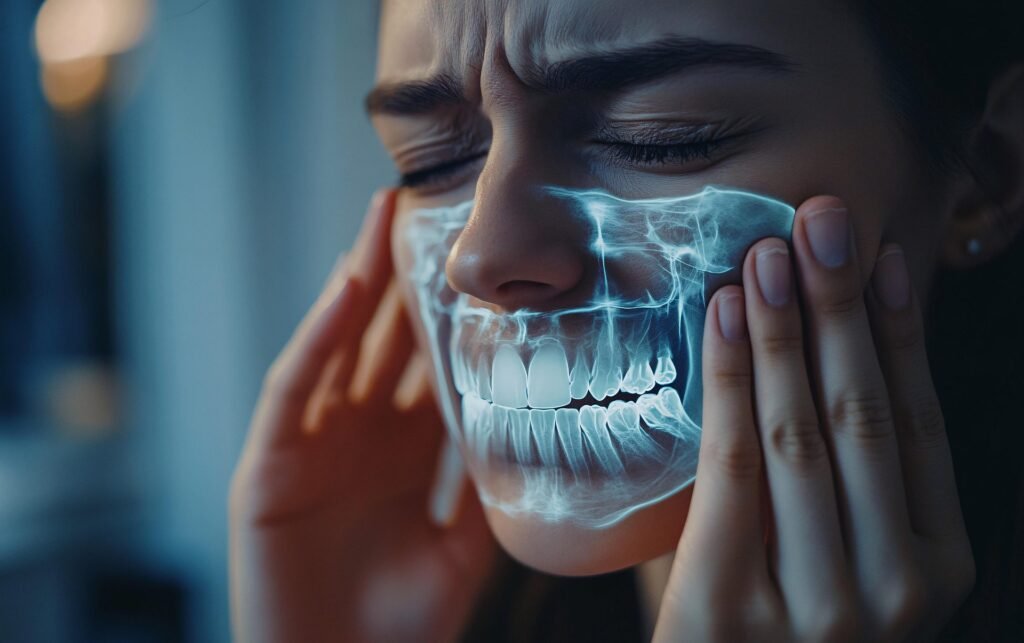
The moment the appointment goes into your calendar, anticipatory anxiety begins working in the background. Your body enters a state of persistent vigilance. This physical bracing shows up most prominently in the muscles of the head, neck, shoulders, and jaw.
This dynamic creates a severe physical feedback loop where anticipatory stress leads to daytime jaw clenching, which carries over into nighttime grinding (bruxism). Bruxism wears down enamel and inflames the jaw joints, ensuring that your teeth and jaw are already sore and tender before the dentist even begins an examination.
The very organ anticipating the procedure ends up absorbing the physical damage of the stress. If you suffer from jaw grinding or severe clenching, I explore this pattern thoroughly in my post on hypnotherapy for bruxism and teeth grinding.
Breaking this physical cycle is essential. Addressing the underlying anxiety pattern eases physical jaw tension naturally, protecting your teeth and allowing your body to settle long before you ever arrive at the clinic.
Root Causes of Dental Fear and Odontophobia
Phobias do not appear out of nowhere. They are learned protective associations created by your nervous system to protect you from perceived harm. Dental phobia typically stems from one or a combination of four primary root causes.
Direct Past Trauma and Childhood Memories
The most common origin is a painful or overwhelming dental experience in childhood or early adulthood. Years ago, dental techniques, pain management, and local anaesthetics were far less advanced than they are today. A single memory of feeling intense pain, being held down, or having a dentist ignore your distress can install a lifelong threat response.
Medical Traumas and Loss of Autonomy
Sometimes dental phobia has nothing to do with teeth. People who experienced medical emergencies, childhood hospitalisations, or severe illness often carry a deep discomfort with clinical settings, white coats, and medical equipment. The feeling of being restrained or unable to move triggers these earlier traumatic memories.
Indirect Conditioning and Absorbed Anxiety
Children absorb emotional reactions from their environment. Growing up with a parent who expressed intense fear of the dentist, made jokes about painful appointments, or visibly panicked before visits can teach a child that the dental office is dangerous. Pop culture and media tropes reinforcing the “scary dentist” narrative also contribute to this learned fear.
Sensory Vulnerability and the Gag Reflex
For some individuals, the phobia centres around physical sensations like an overactive gag reflex or difficulty breathing through the nose while your mouth is open. The sensation of water pooling in the back of the throat while reclined flat can trigger an immediate feeling of suffocation, causing panic even when no pain is involved.
Clinical Evidence for Hypnosis in Dental Care
Using hypnosis to manage dental anxiety is not a novel concept or a fringe alternative approach. It has been extensively studied in clinical environments, yielding consistent physiological and psychological proof of its effectiveness.
The Juge Systematic Review on Physiological Stability
One of the most comprehensive scientific reviews on the topic was conducted by Juge and colleagues, who evaluated decades of controlled clinical trials examining hypnosis in dental care. The review measured subjective anxiety levels, pain perception, required medication dosages, and key physiological markers:
- Heart Rate Stability – Patients utilising hypnosis maintained steady heart rate levels during local anaesthetic injections (traditionally the peak point of physical stress). The control group without hypnosis experienced a sharp, dramatic spike in heart rate during the exact same phase.
- Post-Procedure Recovery – Heart rates in the hypnosis group steadily declined immediately after treatment, reflecting rapid physiological recovery. In contrast, heart rates in the non-hypnosis control group remained elevated long after the procedure concluded.
- Reduced Anaesthetic Requirements – Patients who prepared with hypnosis frequently required lower doses of local anaesthetic and reported lower post-treatment pain scores.
Corah Dental Anxiety Scale Research
In another controlled trial focusing on patients undergoing restorative dental procedures (such as fillings and crowns), researchers utilised the Corah Dental Anxiety Scale (CDAS), a validated metric for measuring dental fear.
The study compared patient anxiety scores across treatments with and without pre-appointment hypnosis:
| Treatment Condition | Average Corah Score | Patient Experience |
| Without Hypnosis | 8.28 | Moderate to high distress, visible muscle tension |
| With Hypnosis | 5.58 | Mild, manageable tension, comfortable completion |
A score drop of this magnitude represents a meaningful clinical shift. It is precisely the difference between someone cancelling an appointment out of panic and comfortably walking into the clinic to complete their treatment.
How Hypnotherapy Works to Neutralise Dental Anxiety
Hypnotherapy works by taking advantage of a natural, focused state of attention. During hypnosis, your physical body relaxes deeply while your mind remains alert and focused. This state allows us to bypass the analytical, logical resistance that usually gets in the way during waking hours and work directly with the automatic responses governing your nervous system.
Here is how the process works to neutralise dental fear:
Deconditioning the Threat Trigger at the Root
When you have a phobia, your brain has paired the concept of “dentist” with “imminent physical danger.” In a hypnotherapy session, we introduce the thought and sensations of a dental visit while your body is completely calm and physically relaxed. This neutralises the old association, teaching your brain that these sensory inputs are non-threatening, which is how we overcome general anxiety with hypnosis.
Mental Rehearsal and Sensory Pre-Conditioning
Athletes use mental rehearsal to prepare their bodies for high-performance events. Hypnotherapy uses the exact same mechanism to prepare your nervous system for a dental visit. By mentally walking through walking into the clinic, sitting in the chair, hearing the equipment, and staying completely calm, your brain creates new neural pathways for composure. When the real appointment arrives, your body follows the newly established safety map.
Restoring a Sense of Control and Voice
Panic thrives on feeling trapped. In hypnotherapy, we establish clear control anchors and boundaries. You learn how to set up physical signals with your dentist (such as raising a hand to pause treatment instantly), shifting your experience from passive endurance to active control.
Calming Involuntary Autonomic Reflexes
Hypnosis is exceptionally effective for managing involuntary physical reactions like a hyperactive gag reflex, shallow breathing, or excessive muscular tension. By teaching your body how to stay physically heavy and relaxed, the physical triggers that usually escalate panic are neutralised at the source.
Practical Steps to Take Before Your Next Dental Visit
While hypnotherapy addresses the underlying panic response at its root, combining professional support with practical self-advocacy makes your next appointment significantly smoother.
1. Find the Right Dentist – Not all dental practices are equipped for high-anxiety patients. Look for clinics that explicitly advertise experience with fearful patients or offer dedicated anxiety-friendly services. Call the practice beforehand and explain your situation. A compassionate practice will welcome this information and adjust their pace accordingly.
2. Schedule a “Talk Only” Appointment – If you have avoided the dentist for years, do not book a major treatment for your first visit back. Request an initial consultation strictly to sit in a regular office chair, meet the team, discuss your medical history, and look at the clinic environment. Knowing that no instruments will enter your mouth during this visit removes the fear of the unknown.
3. Establish a Stop Signal – Agree on a clear physical signal with your dentist before any examination starts. The standard signal is raising your left hand. Agree that the moment your hand goes up, the dentist stops immediately, removes all instruments, and lets you rest for as long as you need. Knowing you hold total control over the pace eliminates the claustrophobic feeling of being trapped.
4. Use Noise-Cancelling Headphones – Since the sound of the drill is a major auditory trigger, bring noise-cancelling headphones to your appointment. Playing spoken word podcasts, audiobooks, or familiar music at a high volume blocks out clinical sounds and gives your conscious mind something steady to focus on.
5. Focus on Diaphragmatic Breathing – When anxiety rises, breathing becomes fast and shallow. Practice slow belly breathing beforehand: inhale slowly through your nose for four seconds, hold for two seconds, and exhale slowly through your mouth for six seconds. Extending the exhale directly signals your vagus nerve to slow your heart rate down.
Take Back Control of Your Dental Health
Living with dental phobia is exhausting. The constant background worry, the physical cost of jaw clenching, and the embarrassment of hiding your smile take a real toll on your quality of life.
It does not have to remain this way. Dental phobia is a learned protective pattern, and because your body learned it, your body can also unlearn it. You do not need to force yourself through appointments using sheer willpower or live in fear of the dental chair for the rest of your life.
By addressing the threat response at its source and updating how your nervous system reacts to the dental environment, you can step into an appointment feeling calm, composed, and completely in control.
You do not have to keep suffering through sleepless nights, cancelling necessary appointments, or letting fear dictate your oral health. If you are ready to update the automatic fear response and take back control, let us talk.





Leave a Reply