
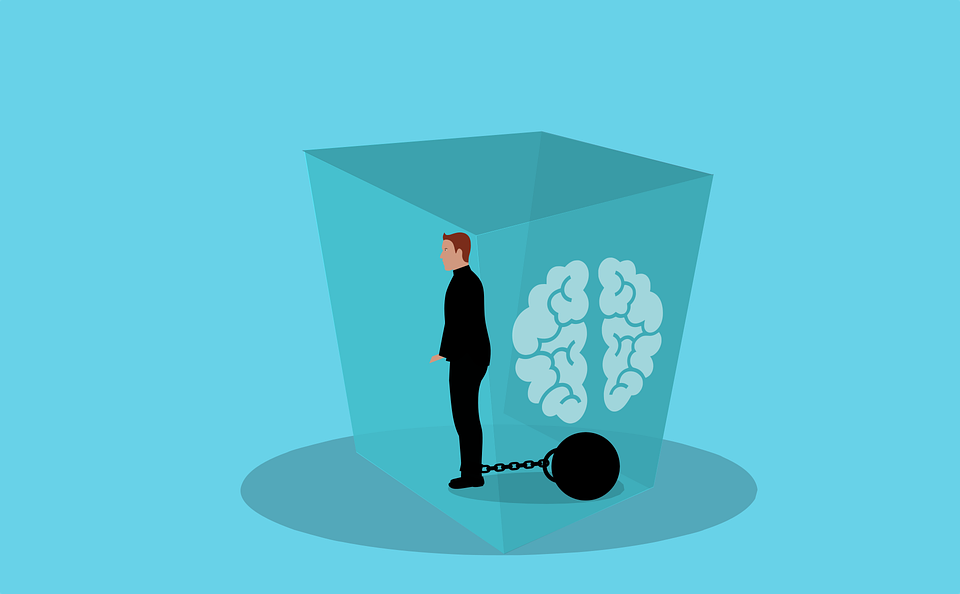
If you have ever found yourself ambushed by a painful memory, such as a smell, a song, or a tone of voice that suddenly drags you back to a moment you would rather forget, you already understand how memory and emotion are bound together. What most people do not realise is that hypnosis has a unique and scientifically supported ability to work directly with this bond. It allows you to change the emotional charge your memories carry, moving them from a place of active threat to a place of quiet history without ever erasing them.
This comprehensive guide explains how your memory works, why difficult memories affect you so deeply, how hypnosis interacts with your brain’s memory systems, and how a skilled hypnotherapist can help you reclaim your peace of mind.
How Hypnotherapy Changes the Way Trauma Is Stored
| Feature | The Old Way (Trauma and Anxiety) | The Hypnotherapy Way |
| Brain Region | Amygdala: Memory is stored as an active, high-alert threat. | Hippocampus: Memory is moved to the historical archive. |
| Experience | Emotional Flashback: You relive the terror and helplessness. | Integration: You remember the event, but the sting is gone. |
| Process | Exposure: Talking about the trauma repeatedly (can be re-traumatizing). | Reconsolidation: Updating the memory in a safe, dissociated state. |
| Goal | Management: Learning to cope with the symptoms. | Resolution: Removing the emotional trigger at the source. |
| Timeline | Often months or years of verbal processing. | Significant relief often achieved in 1 to 3 targeted sessions. |
How Memory Works
Your mind does not record memories the way a camera records video. Memory is a reconstructive process, meaning each time you recall an event, you are not playing it back like a tape. You are actively rebuilding the memory, and in doing so, you have the opportunity to update it with new emotional learning.
There are two memory systems in your mind that are particularly relevant to hypnotherapy:
- The Amygdala: This acts as your brain’s alarm system, processing emotional significance, particularly fear and threat. When something frightening or painful happens, the amygdala stamps that memory with a high-priority emotional tag. This triggers sympathetic activation (the fight-or-flight response), raising your heart rate, flooding your body with adrenaline, and bracing you for survival. This is why you can forget where you left your keys but vividly remember a moment of embarrassment from thirty years ago. Neurobiological research published in *Dialogues in Clinical Neuroscience* confirms that the amygdala plays a central role in encoding emotionally charged memories, and that trauma leads to lasting increases in how reactive this alarm system remains.
- The Hippocampus: This acts as your brain’s filing system, organising memories into context and placing them in the past where they belong. When the hippocampus is working well, a painful memory is stored as something that happened, not something that is still happening. However, under overwhelming threat, your nervous system enters a protective dorsal vagal freeze (the shutdown state). This physical shutdown disrupts hippocampal function, making it incredibly difficult for your brain to contextualise, timestamp, and archive threatening memories properly.
When you live through trauma, this filing process gets disrupted. Traumatic memories can become stuck in the amygdala, unable to be processed and archived by the hippocampus. They remain raw, vivid, and ever-present, ready to fire at any moment when triggered by a sound, a smell, a feeling, or even a thought.
The Four Stages of Trauma Processing in the Brain
Understanding the biological process of trauma recovery helps take away the fear of healing. The journey of transforming an active traumatic trigger into a quiet historical memory follows a structured physical sequence:
1. Subcortical Threat Capture (Amygdala Activation): When a traumatic event occurs, your amygdala immediately captures the sensory details. It bypasses your logical thinking brain, instantly triggering a state of high sympathetic activation to protect you.
2. Hippocampal Filing Failure (Context Loss): Because the threat is so overwhelming, your body enters a dorsal vagal freeze. This protective shutdown blocks your hippocampus from stamping the memory with a time and place, trapping the raw sensory details in your brain’s alarm system where they stay active.
3. Theta State Re-activation (Safe Access via Hypnosis): In a deeply relaxed hypnotic state, your brainwaves naturally slow to a theta rhythm. This state of quiet focus calms your active sympathetic alarm, giving you safe access to your unconscious memories without triggering a physical fight-or-flight response.
4. Memory Reconsolidation (Archiving to Long-term Memory): While holding the memory in this physically relaxed, dissociated state, your brain receives a safe mismatch signal. It realizes you are remembering the event while being completely safe. This mismatch updates the unconscious pattern, uncoupling the panic from the memory so your hippocampus can finally file it away in your historical archives.
Why Bad Memories Carry More Weight Than Good Ones
Your brain is functioning exactly as it was meant to when it holds onto bad memories more tightly than good ones. This is an evolutionary safety response, rather than a personal failing or a sign of weakness. If you survive a dangerous situation, your mind needs to make absolutely sure you remember it so you can avoid that danger in the future.
The stronger your emotional response in the moment, the more deeply your mind writes down the memory. This is known as negativity bias, which is the natural tendency of the mind to give greater weight to negative experiences than positive ones. A landmark review in the journal *Psychological Science* titled “Bad Is Stronger Than Good” found this pattern replicated across many domains. It is why one critical comment can easily overshadow a hundred compliments, and why a single difficult event can reshape your entire worldview.
Elizabeth Kensinger’s research at Boston College, published in *Current Directions in Psychological Science*, found that negative events are remembered in significantly greater detail than positive ones. This appears to be an evolved feature of cognition designed to help us avoid repeating dangerous mistakes.
Growing up in a dysfunctional home means you do not just experience difficult events, you internalise them. A child’s developing mind often concludes that the chaos, the criticism, the neglect, or the abuse must somehow be their fault. This leads to toxic shame, which is a persistent, crushing sense that there is something fundamentally wrong with you, rather than with what happened to you. This is explored in depth in my inner child healing work, because so much of what we call anxiety, low self-esteem, and emotional dysregulation in adults has its roots in these early experiences.
Research on Adverse Childhood Experiences shows that sixty-one percent of people suffer some form of childhood adversity, and one in six have experienced four or more. Abuse, neglect, parental separation, or simply growing up in a home full of conflict all qualify. Until around age seven, children operate in a near-constant theta brainwave state, which is the same state of heightened receptivity that hypnotherapy recreates in adulthood.
During this early window, children are not yet capable of seeing their parents as flawed people in a difficult world. They see everything as a reflection of themselves. A child in a chaotic or emotionally cold household does not conclude that something is wrong with the adults around them. They conclude that something is wrong with them. This is the origin of toxic shame, which is a bone-deep belief that you are fundamentally faulty rather than simple guilt over an action. This is when the subconscious mind absorbs its environment, building its first map of the world. It travels with you into adulthood, entering every relationship, every workplace, and every moment of quiet self-reflection.

Can Hypnosis Remove Bad Memories?
Erasing memories is not possible, and even if it were, doing so would not be ethical. Bad memories serve an important purpose. They are part of how you learned to navigate the world and protect yourself. Removing them entirely would be like deleting the safety information from a manual you might still need.
Research into hypnosis and memory, published in *Frontiers in Psychology*, confirms that while hypnosis can influence how memories are experienced and reconsolidated, it cannot and does not simply delete stored information. The same research also highlights an important caution: hypnotic regression aimed at uncovering hidden memories carries real risks of generating false memories, which is why this is not a legitimate therapeutic use of the technique.
What hypnosis can do, what makes it such a powerful therapeutic tool, is remove the overwhelming emotional charge from bad memories. This allows your unconscious mind to keep the lessons and information without being controlled by the distress. There is a massive difference between remembering that something happened and being flooded with the terror and helplessness of living through it again. Hypnotherapy targets that difference.
How Hypnosis Interacts With the Brain’s Memory Systems
Hypnosis works because it changes your relationship with your own internal experience. In a hypnotic state, the analytical, critical mind becomes quieter, allowing you to access the unconscious where emotional patterns and memories are stored.
This natural shift in your brain is purely neurobiological. Research published in *PubMed* has shown that hypnosis selectively reduces activity in the frontal lobe, which governs conscious attention, while boosting activity in the striatum, which is associated with more automatic, procedural forms of learning. This shift in brain state is what makes hypnosis particularly well suited to working with material that exists below the level of conscious awareness in the unconscious mind.
The key neurobiological concept here is memory reconsolidation. Every time you recall a memory, it briefly becomes malleable before being stored again. This is memory reconsolidation, which allows your unconscious mind to update the emotional content of a memory without erasing the factual details. A systematic review and meta-analysis published in *Translational Psychiatry* found a large effect of reconsolidation-based interventions in treating PTSD, concluding they represent a genuinely promising avenue for trauma treatment. Hypnotherapy takes advantage of this natural window, allowing the emotional content of a memory to be altered and softened while keeping the factual content intact.
Processing Trauma Without Reliving It
One of the most effective hypnotherapy approaches for traumatic memories is the Rewind Technique, which uses what researchers call Visual-Kinesthetic Dissociation. Rather than being immersed in a traumatic memory and experiencing it through your own eyes as though it is happening right now, the Rewind Technique guides you to observe the memory from a safe, external perspective. You become a calm witness to the event, rather than a helpless participant in it.
This distinction is highly significant. When you observe a memory from a dissociated perspective while your body is physically relaxed, your brain receives contradictory signals. The memory is active, but your body is signaling that you are completely safe. This mismatch is precisely what allows the memory to be rerouted, moved from the amygdala’s alarm system into the hippocampus’s historical archive, where it belongs.
Imagine that you are sitting in a comfortable, quiet movie theater. In this safe mental space, you hold a remote control that allows you to watch the memory play out on a screen from a distance, or even fast-forward and rewind the movie at high speed. By using this metaphorical cinema screen, you create a protective, quiet buffer. This process allows your subconscious mind to look at the memory without triggering a physical fight-or-flight response. Your subconscious can safely observe the old event, realizing that the movie is over and you are sitting safely in the theater.
A randomised controlled trial published in *PubMed*, conducted by researchers at Cardiff University School of Medicine, found that the Rewind Technique produced a significant reduction in PTSD symptoms compared to a waitlist control group. It achieved a large effect size comparable to traditional trauma-focused therapies, but required only one to three sessions rather than twelve to twenty. Half of the participants who received the technique no longer met the diagnostic criteria for PTSD after treatment.
Further supporting this approach, a randomised controlled trial of seventy-four male veterans published in *Psychotherapy Research* found that seventy-one percent lost their diagnosis for PTSD following a closely related approach, with large effect sizes that remained stable at a one-year follow-up. You can explore the science and research in much greater detail in my article on hypnotherapy for trauma processing. You can also experience this process through the PTSD hypnosis download MP3 to begin the protocol at home.
Complex Trauma and Childhood Wounds
With standard PTSD there is typically one identifiable event. Complex trauma is different, developing from repeated, ongoing experiences from which there was no escape: growing up in an unpredictable or violent home, being reliant on someone who was also abusive, or having no safe adult to turn to. Pete Walker, in his landmark work on surviving complex trauma, suggests that a vast majority of people grow up with some degree of family dysfunction.
For complex trauma, I use hypnosis differently. Many survivors have clusters of memories that can be desensitised collectively rather than one at a time. More importantly, the toxic shame, the internalised critical voice, and the fractured sense of self are addressed through inner child work, gently reparenting the part of you that took on the belief that you were the problem.
People dealing with complex trauma also tend to act out or act in. Acting out might look like rage, controlling behaviour, or constructing a mask to hide the shame beneath it. Acting in looks like self-harm, addiction, emotional eating, or compulsive overworking. Both are attempts to manage an internal state that was never properly regulated in childhood. Hypnotherapy addresses the root source, not just the coping strategy.
What Happens in the Brain After the Emotional Charge Is Removed
Once the emotional charge has been separated from the memory, the real work of rebuilding can begin. One of the most important things hypnotherapy can do is help you rehearse the future. Because your mind cannot fully distinguish between a vividly imagined experience and a real one, guided visualisation creates genuine neural pathways.
Cognitive neuroscience research has confirmed that mental rehearsal activates the same brain regions as physical action. When you close your eyes and clearly imagine yourself moving through a situation that once triggered you calmly, confidently, and without fear, your brain begins to lay down the neural architecture of that new response.
A meta-analysis of mental rehearsal research found that people who visualised the process of achieving a goal showed improved performance, greater confidence, and reduced stress compared to those who did not use mental rehearsal. The more you rehearse, the stronger those pathways become, building the future rather than just resolving the past.
Hypnosis for Different Types of Memory-Related Challenges
- Trauma and PTSD: Traumatic memories are a primary application. Whether the trauma occurred in childhood or adulthood, the Rewind Technique can help move those memories from active threat to quiet history. For survivors of childhood trauma especially, memories are often fragmented and pre-verbal, stored as physical sensations, emotional states, and body responses rather than clear stories. The unconscious mind and the physical body can begin to update even when the words are not there. A case study published in *Cureus* found that a memory reconsolidation protocol produced significant reductions in complex PTSD symptoms in a patient with a history of prolonged childhood trauma, without requiring detailed verbal disclosure.
- Phobias: Many phobias are rooted in a single encoding event, a moment where the brain decided that a particular stimulus was dangerous. The memory of that original event, even when it is not consciously accessible, continues to drive the phobic response. Hypnotherapy can identify and desensitise the original memory, removing the learned fear response at its source rather than managing its surface symptoms.
- Anxiety and Flashbacks: Anxiety is often your body’s response to anticipated danger, and for people with traumatic histories, that sense of danger is constantly being triggered by present-day reminders of past experiences. A neuroimaging study examining nearly two thousand patients with anxiety disorders found that greater negativity bias was linked to measurable dysfunction in brain regions critical for cognitive control and emotional regulation. By addressing the underlying memories and their emotional charge, hypnotherapy works at precisely the level where this distress originates.
- Emotional Flashbacks and Toxic Shame: Emotional flashbacks are a particularly difficult form of trauma response. Unlike visual flashbacks, which involve reliving a specific scene, emotional flashbacks involve being suddenly flooded with the feelings of the original trauma: helplessness, worthlessness, and terror without a clear trigger. This is especially common for adults who grew up in dysfunctional families. Hypnotherapy and inner child work can address these patterns at a deep level, helping you connect with the parts of yourself that internalised those early experiences and offering them the safety, acceptance, and love they never received.
Why Emotional Truth Matters More Than Historical Accuracy
One of the most common fears people bring to this work is the belief that they need to remember exactly what happened before they can heal from it. They assume therapy requires a precise account, a verified timeline, or a memory that holds up under scrutiny. This belief keeps a lot of people stuck.
The truth is that your mind cannot distinguish between a real event and a vividly imagined one when it comes to emotional processing. This is the same neurological principle that makes the Rewind Technique work, that makes mental rehearsal build real neural pathways, and that explains why a dream can leave you shaken hours after waking. The emotional system does not check facts; it responds to the felt sense of an experience.
What this means is that the therapeutic value of inner child work or trauma processing does not come from reconstructing what happened with forensic accuracy. It comes from engaging with the emotional content of the experience, the feelings that were never allowed to complete their cycle, the needs that went unmet, and the conclusions a younger version of you drew about your own worth and safety. These are not historical artefacts. They are active, running in the background of your system right now, shaping how you respond to intimacy, criticism, and uncertainty. And they can be updated without ever producing a perfect account of the past.
The Mind Communicates in Metaphor, Not Minutes
During hypnotherapy and inner child work, it is common for images and symbolic scenes to surface that do not correspond to any specific memory. You might see yourself as a small child in a dark, locked room, even if you were never literally confined. You might feel a heaviness in your chest that has no story attached to it.
These images are the unconscious mind doing what it does best: communicating emotional reality through the language of symbol and sensation. A metaphor that captures how something felt is often more therapeutically precise than a literal account of what happened. It bypasses the analytical mind, which wants to argue, qualify, and doubt. It speaks directly to the part of you that is still carrying the weight. This is why working with what arises, rather than searching for what is hidden, is the more direct route. Your psyche will surface what is ready to be processed, and my role is to help you work with whatever appears safely.
You Do Not Need to Remember to Heal
Many people carry wounds from experiences that left no clear conscious memory, such as pre-verbal experiences or chronic emotional neglect that happened gradually, with no single defining event. Yet your body kept score. Your nervous system encoded what your mind did not consciously register, and those encodings continue to shape behavior, emotional response, and self-perception in adulthood.
Hypnotherapy works at the level where this material lives. It does not require verbal articulation or narrative reconstruction. Your nervous system can begin to update even when the words are not there. If you have spent time in talk therapy gaining insight without gaining relief, this is likely why. Insight operates at the level of the thinking mind, but the patterns that drive anxiety, shame, people-pleasing, and emotional reactivity are stored deeper than thought.
Generational Trauma and Breaking the Cycle
In object relations theory, parents are described as primary objects, meaning the first relationship through which a child forms their understanding of what people are, what they do, and what to expect from the world. Melanie Klein argued that the quality of the mother’s attunement in the first months of life would shape all future interpersonal relationships. If a parent is anxious, depressed, or emotionally unavailable, the child absorbs that as their baseline for what relationships feel like.
Sigmund Freud’s concept of repetition compulsion captures what happens next: what we do not heal, we either reenact on others or unconsciously invite others to reenact on us. The adult child of a critical parent finds critical bosses. The person whose needs were consistently dismissed finds partners who dismiss them. The cycle does not break by understanding it. It breaks by updating the deep emotional learning that drives the pattern in your body.
When you heal your own inner child, you do not just transform your own life. Clients who do this work consistently report becoming calmer and less reactive with their own children, able to respond from the present rather than from the unresolved past. The work ripples outward. It is genuinely one of the most far-reaching things a person can do.
A Note on the Courage It Takes to Begin
If you are reading this, you have probably been carrying something heavy for a long time. Perhaps you have managed it, coped with it, or worked around it. Perhaps you have tried to talk about it and found that talking only scraped the wound.
The idea that your mind and body can genuinely update, that your nervous system can learn on a deep level that the danger has passed, can feel almost too good to be true. But this is what the science shows. Memory reconsolidation is real. Your brain can adapt throughout life. The stories we carry do not have to remain as vivid and urgent as the day they were written.
If you are ready to explore how hypnotherapy can help you, I offer a free consultation call to discuss where you are and whether this approach feels right for you. You do not need to share your story in detail. We can simply talk about where you are, what you have tried, and whether this approach feels right for you. You can also begin with my guided Rewind Technique recording, Access the PTSD hypnosis download MP3 to begin the protocol at home, which allows you to experience the process privately, at your own pace, in your own home.
Common Questions
Will I remember what happens during hypnosis?
Most people remember everything. Hypnosis is not unconsciousness. It is more like a deeply focused state of relaxed attention. Some people find that details drift away afterwards, much as dream memories fade after waking, but amnesia during hypnosis is rare and not necessary for the sessions to be effective.
Can hypnosis create false memories?
This is a legitimate concern. Research confirms that poorly conducted hypnotic regression can lead to false memory formation. A well-trained hypnotherapist will never use leading questions or suggestions designed to uncover hidden memories. Reputable hypnotherapy focuses on changing your relationship with memories you already have, not implanting or excavating new ones.
How many sessions will I need?
This varies depending on what you are working on. The Rewind Technique for PTSD often produces substantial results in one to three sessions. Deeper patterns rooted in childhood, such as those addressed in inner child work, typically benefit from a more extended, supportive program.
Is online hypnotherapy as effective as in-person?
Yes. Many of my clients work with me entirely online, and the results are fully comparable. The hypnotic state does not require physical proximity. It requires trust, intention, and a safe, quiet space, all of which are achievable over video.
What if I have tried therapy before and it did not work?
Many people have spent years in traditional talk therapy and gained insight without gaining relief. This makes complete neurobiological sense. Talk therapy primarily engages the prefrontal cortex, the analytical, reasoning mind. But traumatic memories are not stored in the reasoning mind. They are stored in the limbic system and the body, encoded as sensation, emotion, and automatic response rather than a coherent narrative. Hypnotherapy works at the level where the patterns were installed, which is why it can succeed where purely verbal approaches have not. If you are ready to stop managing your symptoms and start releasing them, online hypnotherapy sessions can help update the unconscious patterns keeping you stuck.
Is hypnotherapy safe for trauma sufferers?
Yes, when conducted by a trained professional who understands trauma-informed care. The most important distinction is that effective trauma hypnotherapy does not require you to fully relive or verbally disclose what happened. The Rewind Technique works by allowing you to observe the memory from a safe, dissociated position. You remain in control throughout. Your nervous system is not flooded; it is gently updated. The risk comes from poorly conducted regression work, approaches that attempt to excavate hidden memories or push a client into prolonged re-exposure without the right containment. A reputable hypnotherapist will never do this.
Can hypnotherapy resolve trauma without reliving painful memories?
Yes. Traditional talk therapies often require you to recount traumatic events verbally, which can trigger a survival panic loop. Hypnotherapy works below conscious analysis to update outdated threat associations directly in the subcortical brain, allowing you to process and release trauma safely from a relaxed, dissociated perspective without reliving the pain.
If you are ready to explore how hypnotherapy can help you, I offer a free consultation call to discuss where you are and whether this approach feels right for you.





Leave a Reply