
A complete neuroscience-backed guide to overcoming performance anxiety and speaking with effortless confidence

The Secret Reason Your Expertise Fails to Stop Stage Fright
You stand in front of the room, fully prepared. You are a business owner pitching to critical investors, an author preparing for a major media interview, or a dedicated practitioner stepping up to lead an important group programme. You know your material inside and out. You have practised your slides, reviewed your notes, and spent hours preparing the perfect message. Yet, the moment you step into the spotlight, your heart races, your throat constricts, and your thoughts lock up completely.
Expert knowledge does not make your body immune to stage fright. This realisation is incredibly frustrating, especially when your professional success depends on your ability to deliver under pressure. You might feel like you are failing some invisible test of confidence, or that you simply lack a natural gift for performance. The truth is far simpler: your body is responding to a perceived threat, and it is doing exactly what it was meant to do to keep you safe.
Traditional public speaking training treats anxiety as an intellectual problem. It tells you to use mindset hacks, to rehearse more, or to rationalise your way out of your fear. But when adrenaline floods your system, the logical part of your mind is sidelined. To reclaim your voice and command the room, you must shift your focus from conscious strain to physical, unconscious safety.
| Experience deep-state conditioning in my upcoming live training: Public Speaking Mastery – Command the Room Without the Nervous System Hijack Public Speaking Mastery – Command the Room Without the Nervous System Hijack |
How Your Body Takes Over in an Automatic Survival Loop
Public speaking anxiety is a physical survival response. Long before your conscious mind realises you are standing in front of an audience, your body is already evaluating the room for risk. This rapid, unconscious safety assessment is known as neuroception. It operates below conscious awareness, scanning the faces, posture, and tone of the people around you to determine if you are safe or exposed to danger.
When your body registers the undivided attention of a group, it can easily interpret that collective gaze as a high-risk social situation. Historically, being the centre of attention without immediate support meant exposure to physical predators or social rejection, which carried life-or-death consequences. In response, your sympathetic system triggers an immediate survival surge. This response floods your system with epinephrine and cortisol, shifting blood away from your social engagement systems and directing it to your large muscle groups to prepare you for fight-or-flight.
This biological shift causes the physical symptoms of public speaking panic. Your vocal cords constrict, making your voice sound thin or shaky. Your breathing becomes shallow and rapid, and your heart races. These changes happen automatically, without your permission. It is a physical threat response, which is why cognitive hacks like imagining your audience in their underwear fail completely. You cannot use conscious logic to negotiate with an automatic threat reflex.
When your body enters this state of threat, it shuts down your ventral vagal state, which is the physical basis for relaxed social interaction, vocal warmth, and cognitive flexibility. Instead of speaking from a place of connection, you speak from a state of preservation. Your mind starts scanning the room for negative reactions, misinterpreting neutral faces as hostile, and locking you into an active, self-defeating loop. This autonomic lock is a core component of the This autonomic lock is a core component of the constant threat scanning loop which keeps the system on high alert. If this loop runs unchecked, it can trigger a sudden nervous system hijacking panic guide, leaving you physically and mentally paralyzed in front of your audience.
| To learn how these physical patterns affect your body, read the detailed guide: How public speaking anxiety causes physical symptoms like blushing and sweating |
What Clinical Brain Imaging Reveals About Hypnotherapy and Effortless Flow
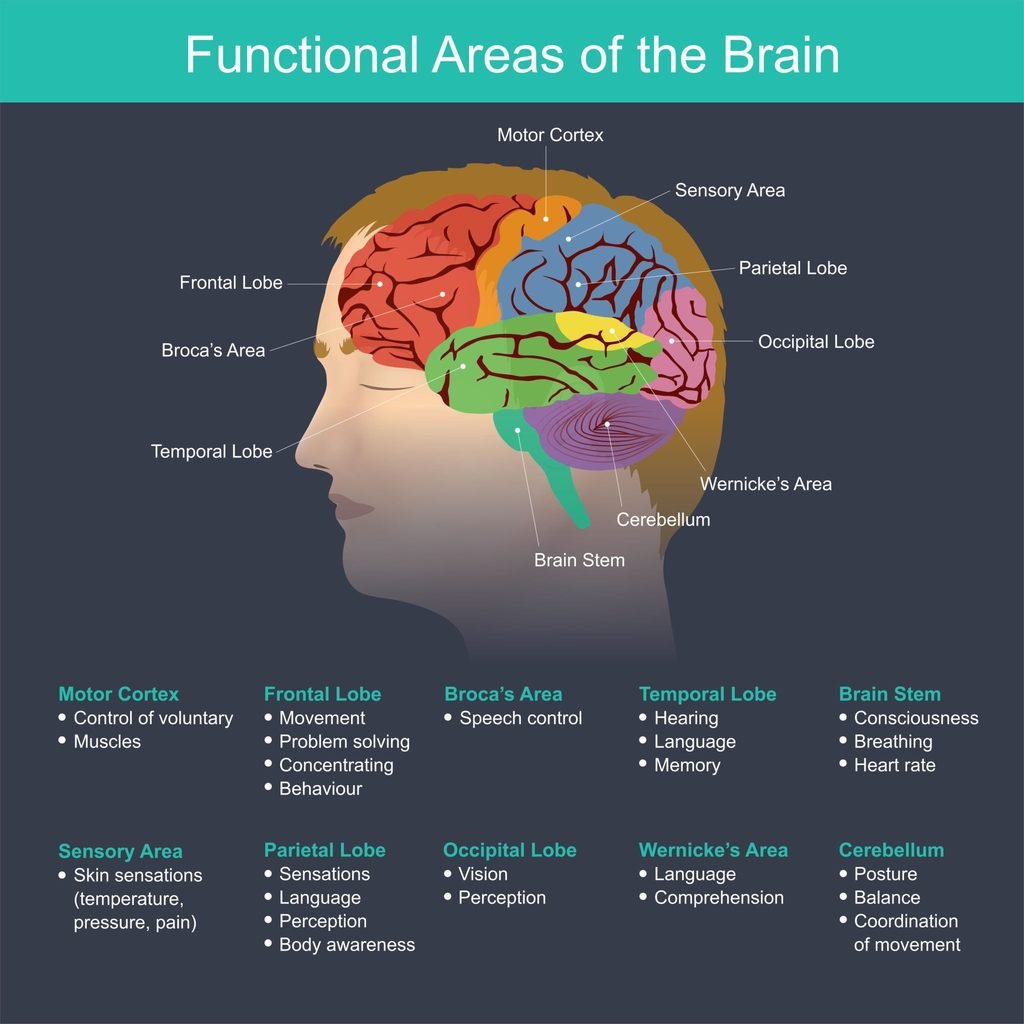
Hypnotherapy offers a reliable way to bypass this conscious block and condition safety at the physical level. Clinical brain imaging studies have shown that hypnosis physically alters how the brain processes information and monitors threat. In a landmark 2016 study by the Stanford University School of Medicine, led by Dr. David Spiegel, researchers used fMRI brain scans to observe people in a hypnotic trance. They discovered a significant reduction in functional connectivity between the executive control network (the dorsolateral prefrontal cortex) and the default mode network, which is responsible for self-referential, analytical, and self-critical thoughts.
In addition, fMRI scans revealed altered activity in the dorsal anterior cingulate cortex (dACC), a brain region that acts as your internal alarm and salience hub, deciding which sensory inputs represent survival emergencies. By calming dACC activity and reducing its coordination with the self-critical default mode network, hypnosis physically quietens the internal alarm. This finding explains why hypnotherapy is uniquely effective for public speaking. By reducing activity in the default mode network, hypnosis quiets the self-critical inner monologue that asks, “What if I mess up?” or “Are they judging me?” This allows you to bypass the critical, self-monitoring loop and step into a state of deep focus and effortless flow. Your focus is directed fully outward, allowing you to connect with your audience naturally.
The efficacy of hypnotherapy in treating performance anxiety is supported by decades of clinical research. A study published in the Journal of Clinical Psychology by Schoenberger et al. (1997) evaluated cognitive-behavioural hypnotherapy in treating public speaking anxiety. The researchers found that participants who received hypnotherapy showed marked reductions in both subjective reports of anxiety and physical distress compared to those who did not. This demonstrates that hypnotherapy directly addresses the automatic physical responses that traditional talking therapies struggle to reach.
Furthermore, extensive meta-analyses by Kirsch et al. (1995, 2010) on hypnotic suggestion and cognitive-behavioural outcomes demonstrated that integrating hypnotherapy with cognitive strategies significantly increases outcome efficacy for anxiety disorders. Standard cognitive-behavioural approaches often fail to address the rapid, automatic responses of the autonomic systems. By working directly with the unconscious mind, hypnotherapy conditions a physical baseline of safety, making it much easier to apply positive cognitive strategies when you are on stage. If you are struggling with a persistent fear loop, you can overcome general anxiety with hypnosis and restore a lasting foundation of calm.
Analytical strain and intellectual struggle are slow, high-effort, and easily depleted when your survival systems are activated. In contrast, your unconscious mind operates rapidly and effortlessly, managing your breathing, posture, and voice without conscious oversight. When you use hypnotherapy to condition safety at the unconscious level, confidence stops being something you have to actively force. It becomes your default, automatic physical response.
Comparing Approaches to Public Speaking Anxiety
| Speaking Aspect | Traditional Logical Methods | Our Unconscious Approach |
| Focus of Intervention | Cognitive mindset adjustments, positive self-talk, and forced rehearsals. | Reconditioning the automatic autonomic nervous system and resetting the threat filter. |
| Nervous System State | Sympathetic mobilisation (fight-or-flight) is ignored or fought using willpower. | Transitioning to a ventral vagal state of physical safety, social connection, and vocal warmth. |
| Neurological Pathway | Slower cortical pathways that are overridden and taken offline during high stress. | Direct communication with subcortical structures (amygdala, dACC) within a receptive theta brainwave state. |
The Three Pillars of Authentic Room Command
Authentic command of a room is built from the inside out, resting on three essential principles that transform how you relate to yourself and your audience. Real presence in front of an audience does not come from memorising a presentation or executing calculated body language gestures.
- Pillar 1 – State Regulation Precedes Delivery. State regulation must always precede script mastery. When your body is in fight-or-flight, your vocal cords constrict, your gestures become rigid, and your mind struggles to access information. Forcing memorised words through a state of panic makes you sound robotic and unnatural. When you prioritise anchoring physical safety in your body, your vocal cadence naturally settles, and your expertise flows without struggle.
- Pillar 2 – Biological Co-Regulation. Human beings are deeply wired to read and mirror the physical states of those around them. When a speaker is physically tense, defensive, or anxious, the audience unconsciously mirrors that tension, resulting in a stiff, guarded room. When you stand in front of a room with a grounded, calm body, the audience mirrors your safety. By anchoring your own calm, you give the entire room permission to relax, creating a natural connection.
- Pillar 3 – Shifting from Evaluation to Service. Public speaking anxiety thrives on self-scrutiny, keeping you trapped in questions like “How do I look?” or “Do they like me?” This inward focus heightens your body’s threat response. Reclaiming your presence means shifting your attention outward, focusing on the value you are offering the room. When you speak to support, guide, or serve the people in front of you, the audience stops being a threat to your standing and starts being a group you are there to help.
Real Time Physical Tools You Can Use on Stage
When you are on stage and feel your body begin to tighten, attempting to force yourself to calm down using mental arguments will only add pressure. Instead, you can use simple, body-based adjustments to communicate safety directly to your mind and slow down your threat response in real time.
- Tool 1 – Horizontal Panoramic Softening. Without moving your head, deliberately soften your gaze and let your visual field spread horizontally, taking in the side walls and the broad layout of the room. Staring rigidly at a single point (foveal vision) signals threat tracking to your brainstem, triggering further adrenaline release. Panoramic vision instantly signals to your reticular activating system that the environment is secure, stimulating parasympathetic tone and allowing your body to relax.
- Tool 2 – The Physiological Sigh. Take a deep, double-inhalation through your nose, quickly sniff a second time to fully inflate your lungs, and then release a slow, sighing breath out through slightly pursed lips. To understand the clinical science behind how this specific breathing pattern mechanically shifts your heart rate and downregulates panic in seconds, you can read my public speaking anxiety post.
- Tool 3 – Spatial and Tactile Grounding. Stand with your feet shoulder-width apart, knees slightly unlocked, and firmly press your weight into the floor. Avoid shifting your weight or moving restlessly, which signals instability to your system. Sensory grounding feeds concrete, present-moment physical data to your insular cortex, helping your brain distinguish between imagined catastrophic future outcomes and actual present safety, making it much easier to stand your ground.
Reclaiming Your Sovereignty in Front of an Audience
Authentic stage presence is a conditioned physical skill that anyone can learn. If your body has built a habit of locking up in front of an audience, it is simply running a protective response that was learned long ago in an environment where visibility did not feel safe. You do not have to let that old conditioning set the terms for how you speak today. You have full permission to step into your authority and share your message with the world.
To move past this pattern for good, you must work directly with the unconscious engine where the loop lives. That is exactly what we do in my workshops and clinical hypnotherapy work. By conditioning deep, physical safety at the subcortical level, we help your body register that the old threat is gone, allowing you to speak with genuine, automatic ease.
| Take the next step and join my live rescheduled training: Public Speaking Mastery – Command the Room Without the Nervous System Hijack |
Frequently Asked Questions About Public Speaking Mastery
Why does traditional public speaking advice fail for severe anxiety?
Traditional public speaking advice focuses heavily on mindset hacks, positive self-talk, and forced rehearsing. These logical approaches assume that performance anxiety is an intellectual problem. However, during acute anxiety, high levels of stress hormones take your reasoning prefrontal cortex offline. Because you cannot reason with an automatic brainstem threat response, these top-down methods fail. Lasting relief requires bottom-up physical safety resets and unconscious reconditioning.
What is the connection between stage fright and the autonomic nervous system?
Stage fright is a physical survival response triggered by your autonomic nervous system. When you stand in front of an audience, your body can unconsciously interpret the collective gaze as an existential threat. This triggers a sympathetic survival surge, flooding your system with adrenaline and cortisol while shutting down your ventral vagal safety state. This physical shift constricts your vocal cords, narrows your vision, and locks your mind into a protective scanning mode.
How does hypnotherapy bypass the critical conscious mind to build confidence?
Hypnotherapy works by guiding your brainwave activity into a relaxed theta state, which downregulates the self-critical Default Mode Network (DMN). By reducing functional connectivity between your self-monitoring brain networks, hypnosis quiets the self-critical inner voice and bypasses conscious logical blocks. This allows a hypnotherapist to communicate directly with your unconscious mind, decoupling high-stakes visibility from automatic threat responses and conditioning safety at a physical level.
Can physical adjustments help manage sudden panic while speaking on stage?
Yes. When panic flares on stage, you can use body-based adjustments to communicate safety directly to your brainstem without taking your eyes off your audience. Softening your gaze to engage panoramic vision instantly signals to your brainstem that the room is safe. Performing a double-inhalation physiological sigh stimulates your vagus nerve to slow your heart rate. Standing firmly with your weight grounded into your feet feeds present-moment physical safety data to your insular cortex, breaking the panic loop from the bottom up.




Leave a Reply