Online Hypnotherapy for Anxiety Relief & Stress Management
Break the Cycle of Chronic Worry and Panic Attacks
Anxiety was once a big problem for me, it stopped me from making friends, forming healthy relationships and enjoying my life. Anxiety caused to suffer all kinds of difficulties.
That’s Why I Am Passionate About Helping People Overcome Anxiety
My Anxiety Clients Get Results
“My anxiety was so bad I could not sleep for over 2 weeks. I contacted Mark who is a brilliant hypnotherapist. He was very kind, flexible and supportive in helping me overcome my anxiety issues.
He is genuinely committed to seeing his clients succeed. My sleep has improved and my anxiety has reduced with the hypnosis sessions and techniques Mark has taught me.”
Schedule Your Free Call Below To Find Out More
My Personal Experience of Anxiety
Until I used hypnotherapy to overcome it, anxiety was a very big issue for me. A fear of blushing (erythrophobia) was a major problem and I was constantly worried about how other people perceived me. In social situations my palms would sweat and I would blush profusely. The more I tried to suppress these reactions the worse they became. As I always say to my clients and workshop attendees: what you resist not only persists but becomes stronger.
Social anxiety stopped me forming lasting friendships and made it hard to keep jobs. I went through countless positions after being thrown out of college. The only roles I could hold down were in sales, because the focus was on targets and results rather than how I was behaving. Being on a call gave me an external focus. When I was thinking about a customer’s needs I was not inside my own head worrying about what people thought of me or whether I would blush.
Even in sales, anxiety reduced my career prospects. It led to what one manager kindly called “idiosyncrasies” — behaviours I had developed to try to soothe myself. These stopped me being taken seriously or being promoted. My reduced social circle and difficulty maintaining relationships eventually led to getting married far too young and a painful divorce.
Understanding Anxiety: It’s Not What You Think, And How Hypnosis Can Help
Anxiety. It’s a word we hear constantly. In fact, anxiety disorders are cited as one of the most prevalent forms of mental distress globally. Here in the UK, it’s estimated that around 25% of the population experiences anxiety or depression, with roughly 9% grappling with both. But here’s a crucial point: anxiety itself isn’t a disease, a disorder, or a mental illness.
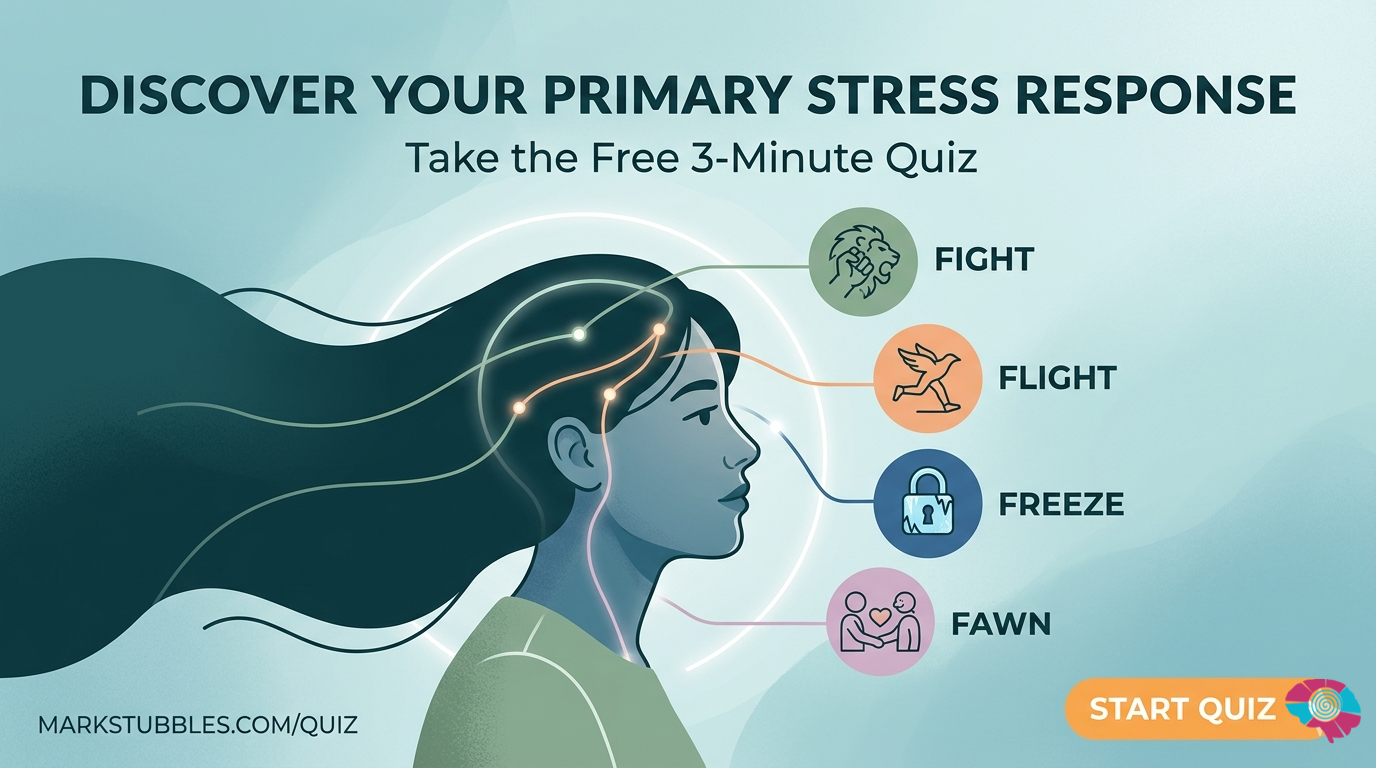
Instead, think of anxiety symptoms as your body’s innate alarm system, a natural response designed to protect you from danger. In certain situations, this system can be incredibly beneficial. The racing heart, the heightened senses – these are components of our primal fight, flight, or freeze response, orchestrated by the sympathetic nervous system. Hormones like cortisol and norepinephrine flood our system, preparing us to face a perceived threat. In essence, it’s your body working hard to keep you safe. It’s not about eliminating these feelings entirely; that’s simply not how we’re wired.
Imagine facing a genuine life-or-death situation. That surge in heart rate becomes invaluable, ensuring your muscles receive the oxygen and blood they need to run or fight. The sudden sweat helps regulate your body temperature during intense physical exertion your system anticipates. Tunnel vision sharpens your focus, directing all your attention to spotting danger, maximizing your chances of survival.
However, when this natural response is triggered inappropriately or becomes chronic, the very mechanisms designed to protect us can become debilitating. That same tunnel vision that once helped you spot danger can now impair memory, cloud concentration, hinder logical thought, and impede clear decision-making.
Even bodily functions are affected. Digestion requires energy, energy your sympathetic nervous system believes is better used for fighting or fleeing. This can lead to a suppressed appetite, and if you’ve recently eaten, feelings of nausea or even vomiting. Interestingly, individuals prone to anxiety are also often more susceptible to irritable bowel syndrome, further highlighting the gut-brain connection.
Furthermore, in the face of a perceived immediate threat, your immune system takes a backseat. Energy is diverted away from fighting off viruses and bacteria, leaving you more vulnerable to common illnesses like colds, and potentially more serious health issues in the long run.
Anxiety: Often a Learned Response, Not an Inherent Flaw
Here’s a fascinating insight: it’s widely believed that humans are born with only two fundamental fears – the fear of falling and the fear of loud noises. All other fears, including many anxieties, are learned as we grow. Scientific research has shown that until around the age of seven, a child’s brain operates predominantly in a theta brainwave state, a period known as the imprint period. This is a time of intense learning, where we absorb complex skills like walking and talking. During this period, neuroplasticity, the brain’s ability to form new connections, is at its peak.
In prehistoric times, rapid learning of what was safe and what wasn’t was crucial for survival. Our ancestors observed their parents and other members of their tribe to understand what to fear and what to avoid. This tendency to learn through observation persists today. Children often pick up fears and phobias simply by witnessing or hearing their parents’ anxieties. Regularly seeing a parent or significant role model in a state of anxiety can deeply imprint the belief that the world is inherently a dangerous place.
Growing up around dysfunction, narcissism or persistent emotional invalidation is one of the most common causes of anxiety. When we are children our neuroplasticity is at its highest and we rely on the adults around us to help us make sense of the world and ourselves. If those adults are unable to do that, we can internalise the belief that we are somehow at fault or unsafe in the world.
Some people trace their social anxiety to bullying at school, to feeling persistently out of place, or to a specific embarrassing or humiliating event. In my experience of living with social anxiety and helping others overcome it, there is almost always a traumatic event or pattern of events behind the problem. These do not need to be dramatic or life-threatening incidents, particularly if they occurred in childhood when the brain is most impressionable.
Abuse and unresolved trauma are often generational. What we do not heal we tend to either pass on to others or unconsciously invite into our lives again. This is what therapists call repetition compulsion.
The Impact of Trauma on Anxiety
Anxiety can also be a direct consequence of traumatic experiences. Individuals suffering from PTSD (Post-Traumatic Stress Disorder) frequently experience intense anxiety. Personally, I used to live with CPTSD (Complex Post-Traumatic Stress Disorder), a condition often seen in prisoners of war and those who endured prolonged childhood adversity, such as persistent physical and emotional abuse with no escape.
For me, anxiety and emotional flashbacks became a conditioned response. This concept, developed by the Russian physiologist Ivan Pavlov, illustrates how our brains can learn to associate neutral stimuli with strong emotional reactions. Pavlov’s famous experiment with dogs showed how the sound of an alarm, initially unrelated to food, eventually triggered salivation simply because it had been repeatedly paired with the presentation of meat powder. Similarly, environmental cues or internal sensations can become triggers for anxiety in those who have experienced trauma or chronic stress.
While many people find significant relief by focusing on managing their current symptoms, it’s common for chronic anxiety to have deeper roots. If you feel your anxiety is tied to past experiences or persistent emotional patterns, you may also want to explore my specialized approach to healing the root of trauma and C-PTSD.
How I Use Hypnotherapy to Treat Social Anxiety
When I work with a new client on social anxiety, my first question is always when the issue began and what was happening in their life at that time. If there was a specific traumatic incident such as a breakup, an attack, a public humiliation or an accident, my first step is to remove the negative emotional charge from that memory.
Traumatic memories carry more emotional weight than ordinary ones because the brain attaches significance to them as a survival mechanism. In prehistoric times this was useful. In modern life it can keep us trapped in patterns of fear and avoidance long after the original danger has passed. Importantly, we can neutralise the emotional charge in a traumatic memory without requiring a client to fully relive it.
If a client grew up in a dysfunctional environment or experienced repeated bullying I would typically recommend we combine Inner Child work. The purpose of that work is to help the inner child feel safe, loved and accepted. Most people have experienced some degree of childhood dysfunction and can benefit from this approach whether social anxiety is the presenting issue or not.
If a client cannot or does not want to address a specific memory, hypnosis is still highly effective. The mind cannot distinguish between a vividly imagined event and a real one. Visualising yourself feeling calm and confident in the situations that previously triggered anxiety creates new neural pathways in the brain. With repetition those pathways strengthen and the new response begins to feel natural.
Watch: 3 Practical NLP Techniques for Instant Calm
If you are dealing with sudden panic or situational anxiety, you do not have to wait to feel better. In this live session recording, I break down exactly how anxiety functions as a conditioned response and guide you through three powerful tools from Neuro-Linguistic Programming (NLP) that you can use to interrupt anxious patterns in real time.
What you will learn in this video:
The Anxiety Anchor: How to use physical conditioning to trigger a rapid state of calm and confidence whenever you need it.
The Dimmer Switch: A simple submodality exercise to turn down the volume on negative internal thoughts and critical voices.
The Swish Pattern: A rapid mental exercise designed to replace old anxiety triggers with a calm, resourceful version of yourself.
The Far-Reaching Effects of Living with Anxiety
Constantly operating in a state of fight or flight has significant consequences. As mentioned earlier, it suppresses our immune function, making us more susceptible to illness. But for me, the impact of anxiety went far beyond just more frequent colds. It profoundly affected my relationships, friendships, and career opportunities. Like many anxiety sufferers, my limited social circle and relationship difficulties unfortunately contributed to feelings of depression.
It’s important to remember that you are not alone in this struggle. And there is hope. A 2019 study published on PubMed found that, on average, participants treated with hypnosis showed greater improvement than approximately 84% of control participants, highlighting the potential of this approach.
Why Hypnosis Offers a Powerful Solution for Anxiety
I firmly believe that hypnosis offers a uniquely effective pathway to helping anxiety sufferers for several key reasons:
Detraumatizing Memories Without Reliving Them: Using hypnosis, we can access and detraumatize or remove the emotional charge associated with traumatic memories that may be fueling your anxiety, often without needing to fully relive the painful events. This gentle approach can be incredibly liberating.
Achieving Deep and Lasting Relaxation: Hypnosis facilitates deep levels of relaxation. The more consistently you experience this profound state of calm, the deeper and more ingrained your overall level of relaxation becomes. This counteracts the chronic state of tension that often accompanies anxiety.
Harnessing the Power of Visualization for Change: Our minds often struggle to distinguish between a vividly imagined event and a real one. Hypnosis significantly enhances our ability to visualize. By guiding you to vividly imagine yourself feeling calm, relaxed, and confident, we can actually help create new neural pathways in your brain. With repeated visualization, these pathways strengthen, making it easier for you to effortlessly embody these desired states.
Why Online Hypnotherapy Works So Well for Anxiety Sufferers
Many people still assume they need to see a hypnotherapist in person to get results. In practice, online sessions via Zoom or Google Meet work just as well as face-to-face therapy and are often more effective for people dealing with anxiety, low self-esteem or social anxiety.
The biggest reason is comfort. Doing the session from your own home means you are already in the environment where you feel most at ease. For people whose anxiety is activated by unfamiliar places or situations, this is a significant advantage. There is no journey to make, no waiting room to sit in, and no journey home to deal with when you are still in a relaxed state after the hypnosis.
Hypnosis is not mind control. It is not what you see on television or stage shows. It is a natural state of focused attention that everyone experiences several times each day. It is something that is done with you, not to you.
What to Expect From a Session
My sessions are longer than the standard hour. A typical session runs between 90 and 120 minutes because I spend the first 40 to 60 minutes really getting to understand your situation. In this time I use conversational techniques and NLP to help you start seeing things differently even before the formal hypnosis begins.
I do not use scripts. I tailor every session to the specific needs and goals of the individual client. I have trained extensively in psychotherapy, NLP, CBT and other approaches, which means I can draw on a wide range of tools depending on what is most useful for you.
I usually suggest exercises and homework between sessions to help you build on what we cover together and track your own progress. The hypnosis itself begins only once I have a clear picture of what you are experiencing and what you want to achieve.
Zoom works on laptops, desktops, tablets and smartphones. It is a stable platform and disconnections are rare. If one did occur you would simply wake feeling rested, as if from a light sleep, and reconnect via the same link.
Anxiety, Low Confidence and Self-Esteem: How They Connect
Self-esteem and confidence are often confused but they are not the same thing. Self-esteem is how you value yourself independent of external circumstances. Confidence tends to be situation-specific. By working on one, we almost always improve the other.
After sessions focused on self-esteem, clients report that they stop looking to the outside world for approval or validation. They become less afraid of rejection, more able to take responsibility for their choices, and better equipped to form healthy relationships without the need to please others at their own expense.
People with healthy self-esteem are self-motivated. They do not need constant reassurance. Hypnotherapy helps create this shift by working directly with the subconscious patterns that drive low self-worth, rather than simply discussing them at a conscious level.
What Clients Say
“I was really suffering with anxiety to the point of having many panic attacks and felt frightened. Mark is a lovely man, so understanding, which helped me open up and therefore treatment was successful. I now have not had a panic attack, I have slowed down and said yes to things I would not normally have done. I would definitely recommend to friends and family.”
“I have noticed a difference in the three sessions. I know I have work to do myself too but I have felt more confident and less anxious. I hope to notice more changes in time.”
“Extremely pleased with the results of my hypnotherapy sessions with Mark. I never knew that this type of therapy could be so powerful. I feel differently and am becoming the person I want to be. I never thought it would happen so quickly within the space of a few weeks. Highly recommend it.”
How Many Hypnotherapy Sessions Will You Need to Find Relief?
It’s crucial to understand that every individual’s journey with anxiety is unique. Therefore, it’s challenging to give an exact number of hypnotherapy sessions needed to significantly reduce anxiety’s negative impact on your life. However, based on my experience, I generally recommend that clients commit to at least three hypnotherapy sessions to begin experiencing lasting change.
Many of my clients report feeling a positive shift even after their first session. And after completing a series of three sessions, the majority report experiencing life-changing results, finding a significant reduction in their anxiety and a noticeable improvement in their overall well-being.
Ready to Take the First Step Towards a Calmer, More Confident You?
If you’re tired of anxiety dictating your life and are seeking a powerful and effective way to find relief, I invite you to schedule a free, no-obligation consultation call. Let’s discuss your specific experiences and explore how hypnotherapy can help you reclaim your peace of mind.
Hypnotherapy for Stress Relief
A Modern Solution While stress and anxiety can feel overwhelming, they are essentially the body’s “Fight or Flight” response stuck in the “on” position. As a Hypnotherapist, I specialize in helping you switch that response off.
Through Online Hypnotherapy (via Zoom or Google Meet), we can bypass the conscious “chatter” of the mind and work directly with the subconscious. This process allows us to:
Rapidly reduce physical symptoms like increased heart rate and that “knot” in the stomach.
Reprogram the brain for long-term resilience, helping you develop healthier ways to perceive and cope with daily pressures.
Find immediate relief in a safe, relaxing environment from the comfort of your own home.
Unlike traditional talk therapies that can take months to show results, hypnotic language and trance work often provide a quicker, more sustainable shift in how you feel and react.
Ready to reclaim your calm? I offer a Free Hypnotherapy Consultation to discuss your specific situation and show you how we can work together to lower your stress levels. Simply select a good time for you above or visit the free consultation page.
Frequently Asked Questions
Is hypnotherapy a viable alternative to medication for anxiety?
For many people, yes. Hypnotherapy addresses the subconscious conditioning that drives chronic anxiety, the thing medication cannot touch.
Antidepressants and anxiolytics can reduce the intensity of symptoms, but they don’t update the learned threat responses running beneath conscious awareness. When the prescription ends, the pattern is still there.
Hypnotherapy works at the level where the pattern was installed, which is why results tend to persist after treatment ends. If you’ve been offered medication and want to explore a non-pharmaceutical route first, a free consultation call is a good place to start.
What If I've Already Tried Therapy and It Didn't Work?
This is one of the most common things I hear, and it makes sense. CBT and talk therapy are genuinely useful for many people. They help you identify distorted thinking patterns, challenge unhelpful beliefs, and build better coping strategies. If you’ve done that work and still feel anxious, it doesn’t mean therapy failed you. It means you were working at the level of conscious thought, and your anxiety isn’t living there.
Chronic anxiety is a subconscious process. It runs below the level of rational analysis, which is precisely why you can understand intellectually that a situation isn’t dangerous and still feel your chest tighten and your thoughts spiral the moment you’re in it. Knowing why you’re anxious rarely stops you being anxious. The conditioned threat response that drives your symptoms was installed before you had the cognitive tools to examine it, and it doesn’t respond to examination now.
Hypnotherapy works at the level where the pattern actually is. In the focused relaxation of the hypnotic state, we can access the subconscious associations that are triggering the response and update them directly, rather than reasoning with the surface expression of them. For many people who felt stuck after talk therapy, this is the missing piece.
Can I Have Hypnotherapy If I'm Taking Medication for Anxiety?
Yes. Hypnotherapy is completely compatible with SSRIs, beta-blockers, and other medications commonly prescribed for anxiety. There are no contraindications. You do not need to reduce or stop your medication before starting sessions, and I would never suggest you do so without guidance from your prescribing doctor.
What medication and hypnotherapy are doing is different enough that they work well alongside each other. Medication regulates the neurochemical environment, reducing the intensity of anxiety symptoms at a physiological level. Hypnotherapy works on the learned threat responses and subconscious associations that are generating those symptoms in the first place. One manages the signal; the other addresses what’s sending it.
Many of my clients come to hypnotherapy while on medication, often because they want to treat the root cause rather than manage symptoms indefinitely. Some find that as the underlying patterns shift through our work together, they are in a better position to have a conversation with their doctor about their medication over time. That is always a decision made with medical supervision, not something I direct or advise on, but it reflects the kind of durable change that hypnotherapy makes possible.